
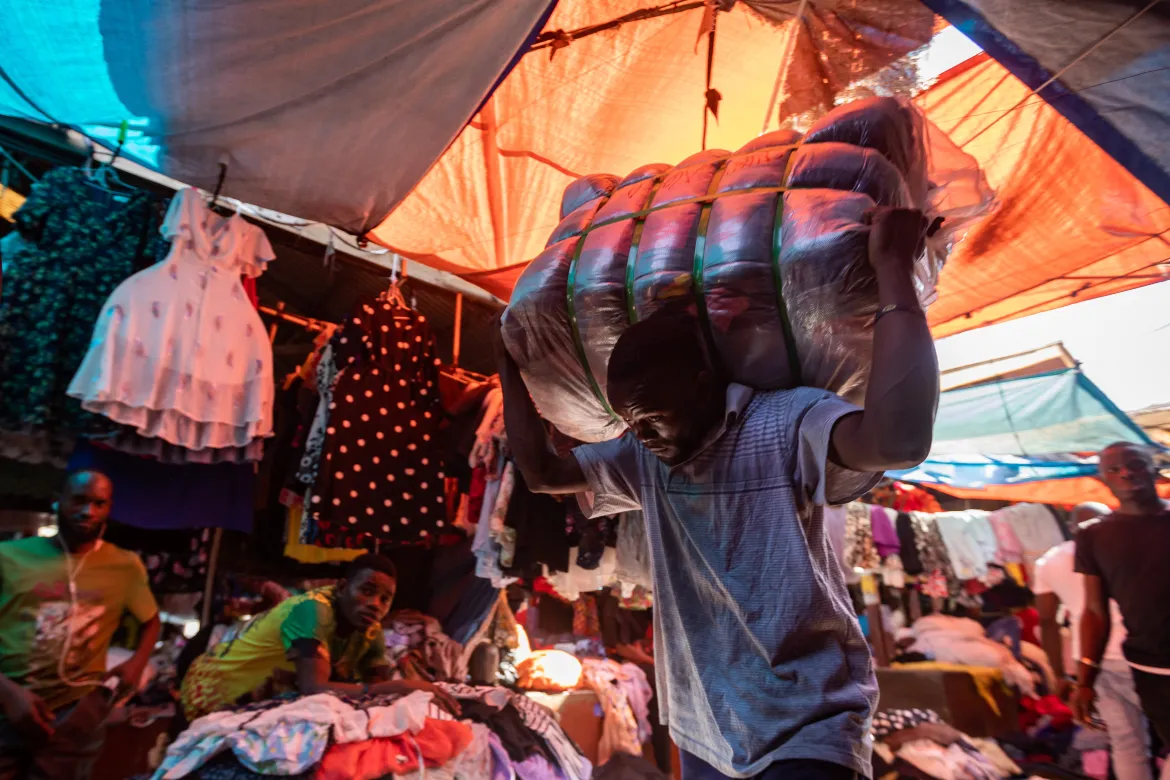
In Uganda, fashion often revolves around second-hand clothes, handbags, and shoes—the ‘Mivumba,’ are not viewed as discarded items for the poor, but rather as a practical lifestyle choice. For many Ugandans from humble backgrounds, the second-hand market is a lifeline. A walk through Owino Market or your local ‘Katale’ spot reveals the magic of this market; bargain hunters weaving through the stalls, vendors shouting out prices, and deals being made as the right to clothing is exercised.
The truth of the matter is that fashion has never been cheap. If you have ever tried shopping for an event—a wedding, party or graduation—you definitely get my drift. A boutique suit? UGX. 300,000 upwards—let’s not even mention the shoes and accessories. As a result, the average Ugandan opts for something more manageable. Not that they are cheap, but rather more affordable and within budget.
The numbers alone speak volumes. Uganda imports an estimated 100,000 metric tonnes of second-hand clothing annually, primarily from Europe, North America, and East Asia; accounting for about 81% of Uganda’s clothing market. Given these figures, what’s behind the growing allure of second-hand fashion in Uganda?
Affordable Quality. It’s no secret the Ugandan economy has its challenges, and saving money is a priority for most citizens. Second-hand markets become alternatives to the break-the-bank boutiques. Good strong shoes at an affordable bargain, great clothes, one visit to your tailor and that thrifted pair of pants becomes the perfect custom fit. Bags and accessories—Budget-friendly.
What’s more, they inspire a sense of treasure hunting. Nothing beats the feeling of having a colleague commend your attire, talking of how nice it looks, unbeknownst to them how you scouted Downtown Kampala to get it. You just have to know how to look great in second-hand fashion. How?
Tips on buying second-hand clothes
Know Where to Shop? Markets like Owino, Kalerwe, and Nakawa are treasure troves, however, this shouldn’t lead to ignoring smaller markets in your neighbourhood—they often have hidden gems as well.
Early Bird… The best pieces and prices are usually scooped up early in the day. Start your hunt before the crowds arrive.
Inspect Before You Buy. Look out for stains, tears, or missing buttons. A little wear and tear can add character, but major flaws might not be worth the hassle. As a rule, always inspect your finds and gauge whether you can make it work or not.
Negotiate. Bargaining is part of the downtown Kampala culture. In fact, your bargaining power will always dictate how much you take back home so don’t hesitate to haggle for a better price—it’s expected and encouraged. You can check out some tips on shopping downtown Kampala.
Tailor It. The best way to look great in a Muvumba is to tailor it to your size and needs. A quick trip to your local tailor can transform a good find into a perfect fit, whether it’s adjusting the hem or taking in the waist, small tweaks can make a big difference.
However, while many find the second-hand market a go-to place for wellbeing, the future seems bleak. The president of Uganda recently reignited the debate over banning second-hand clothing imports. His argument? They stifle the growth of local textile industries and prevent Uganda from developing a robust manufacturing sector. While this may seem like a step towards economic independence, the ban raises concerns for the thousands of people who rely on this trade for their livelihoods.
Moreover, critics argue that Uganda’s local textile industry isn’t yet equipped to meet the demand for affordable clothing. For many Ugandans, second-hand fashion is not just an option—it’s the only viable one.
Moreover, the second hand market doesn’t just clothe Ugandans; it feeds families, pays school fees, and supports small businesses. From the traders in Owino Market to the Boda Boda riders ferrying sacks of ‘Mivumba,’ this industry touches multiple sectors. However, it’s also worth noting the flip side: heavy reliance on imports results in funds flowing out of the local economy instead of fostering domestic growth.
To strike a balance, some experts propose policies that support local textile production while keeping second-hand fashion. This way, Ugandans can enjoy the best of both worlds: affordable options and a thriving local industry.
So, whether it’s a student looking for a sharp suit for a job interview or a bride hunting for an affordable gown, thrift stores are there to deliver…well, until a clear future is declared.
Join our WhatsApp Channel for more!



2 thoughts on “Second Hand Clothes in Uganda: The Magic of Mivumba Clothes”
Pingback: Uganda’s Debt Crisis: Can We Survive Without Foreign Aid - Nymy Net
Pingback: Popular Places in Kampala and the Origin of Their Names - Nymy Net