
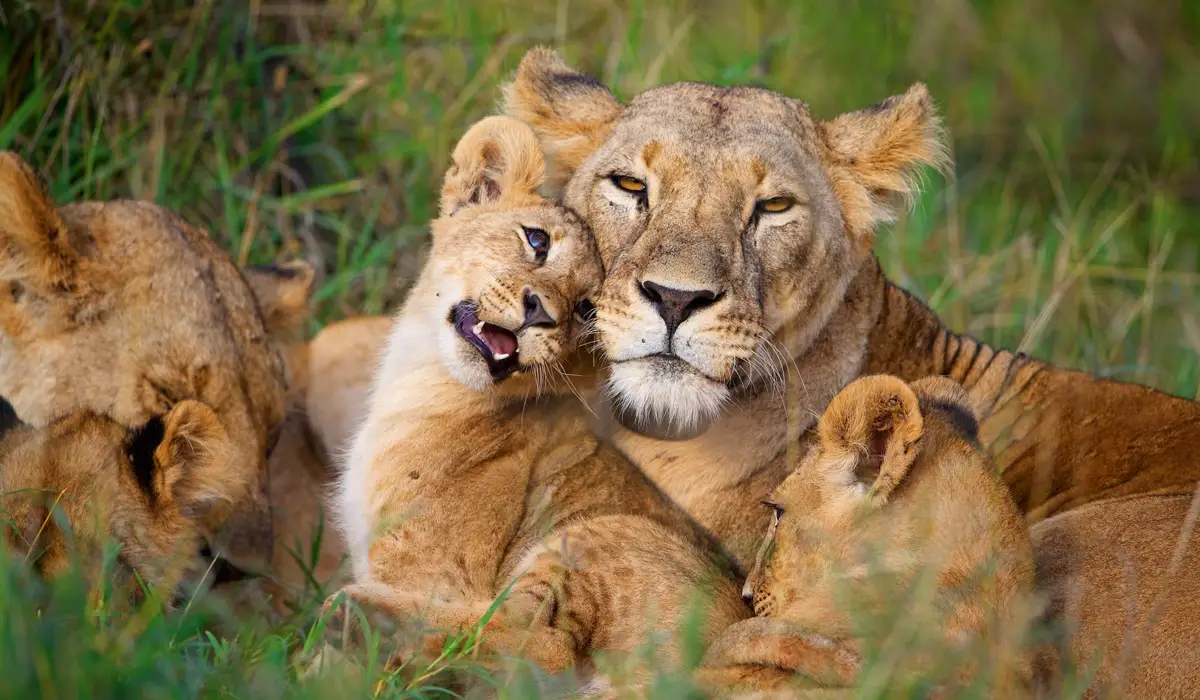
Every 10th August, the world comes together to celebrate World Lion Day, a day that reminds us of the importance of protecting lions and natural habitats where they live. In Uganda, this call has become more urgent as the country’s lion population continues to decline.
Uganda is now home to an estimated 291 lions, down from 493 in 2011. This represents a decline of more than 40% in about 14 years. Even more concerning is that around 80% of the remaining lions, about 240, are concentrated in Murchison Falls National Park. Queen Elizabeth National Park has about 40 lions, while Kidepo Valley National Park has only about 12.
These numbers show that protecting Uganda’s lions cannot be left to national parks alone. Lions need safe habitats, enough food and water, and healthy ecosystems to survive. When these ecosystems are degraded or fragmented, wildlife faces greater pressure.
ECOTRUST, a Ugandan environmental conservation organisation, is supporting the restoration of more than 50,000 hectares of degraded and fragmented land across the Albertine Rift region, including community and public land outside of the protected areas. Working with local communities, private landowners, forest owners, partner organisations and the government, this initiative is not only promoting habitat connectivity but also providing livelihoods for local communities and much-needed natural resources that both people and wildlife depend on.
The Albertine Rift is one of Africa’s most bio-diverse regions, with tropical forests that harbour an astounding 52% of Africa’s bird species; 39% of its mammal species; 19% of its amphibians; 14% of its reptiles; and 14% of its plants (Plumptre et al., 2007). At the same time, millions of people depend on the region’s agriculture, forests and other natural resources for their livelihoods.
Protecting these landscapes is therefore not only about wildlife. It is also about ensuring that communities can continue to benefit from healthy ecosystems.
Landscape restoration can take many forms. It can include planting trees, restoring degraded land, protecting forests and supporting communities to adopt environmentally friendly farming practices. These activities help improve ecosystems’ health while also creating opportunities for communities to earn a living.
For lions, healthy landscapes are especially important because they need enough space, food and water to survive. Restoring degraded areas and maintaining connections between habitats can help create healthier ecosystems for wildlife.
The sharp decline in lion numbers also shows why conservation efforts must look beyond individual animals. If most of Uganda’s remaining lions are concentrated in one protected area, protecting the wider ecosystem around key wildlife habitats becomes even more important.
Conservation also cannot happen inside national parks alone. Communities living around protected areas are important partners. Their decisions about farming, tree growing, grazing and the use of natural resources can have a direct impact on the environment.
When communities are supported to restore degraded land and benefit from conservation-friendly activities, they become important partners in protecting nature.
World Lion Day provides an opportunity to look at conservation from this wider perspective. Saving lions is not only about protecting a single species. It is about protecting the ecosystems that allow lions and other wildlife to survive.
It is also about helping people understand that their daily activities are connected to the health of nature. Farmers, communities, conservation organisations, government institutions and other partners all have a role to play in protecting Uganda’s natural heritage.
As Uganda marks World Lion Day on 10th August, the message should go beyond the lions we see in national parks. It should also draw attention to the landscapes around these protected areas and the people who live within them.