
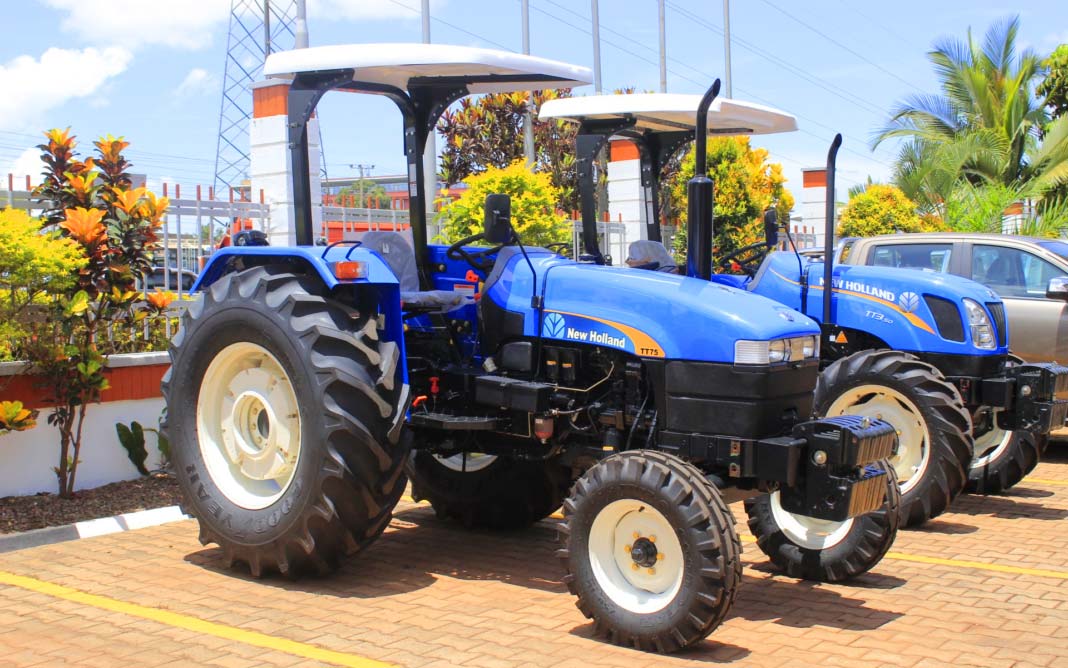
After more than four decades of operation, CMC Motors group has announced its decision to exit the East African market, particularly Kenya, Uganda and Tanzania—a decision that is expected to have great reparations for the region’s automotive and agricultural sectors, given CMC’s longstanding contributions.
What is CMC Motors, and What Role Has It Played in East Africa’s Agricultural Sector?
To give you a picture, if you have ever seen an agricultural tractor in Uganda, chances are it was supplied by CMC Motors Group, thus, their role in the industry has been providing machinery and services to support farmers across the East African region.
The company has been a trusted distributor of well-known tractor brands like Massey Ferguson and New Holland, helping modernise farming practices with reliable equipment for land cultivation, harvesting and mechanisation—all those government giveaway tractors in Uganda were supplied by CMC Motors.
Thus, their exit has led many farmers to ponder what comes next as they had come to rely solely on the company. This is understandable considering the prolonged time the Dubai-based Al-Futtaim Group subsidiary has been in the market.
They cited many reasons for their departure, among them;
Economic Pressures: emphasising that the East African economies have faced many challenges and fluctuating economic conditions that have affected their business operations.
Currency Depreciation: As we mentioned in our Uganda Bets on Gold to Save the Shilling Economy article, local currencies in Uganda and East Africa have greatly depreciated against major global currencies, which in turn increases the cost of imports and thus affects profit margins.
Rising Operational Costs: The Company stated that operational costs, including logistics, stuffing and compliance costs, have been on the rise, making it hard to maintain profitability in East Africa.
Despite all this, CMC Motors tried to initiate a transformation program in 2023 with the vision to restructure and improve sustainability. However, they soon concluded that the prevailing market conditions did not offer a viable path forward; thus, they instead started their wind-down process in compliance with local regulations and distributorship agreements, as covered in CMC Motors to exist EAC market over High Operational Costs.
This exit, however, has been met with numerous concerns from the agriculture sector. CMC has been a major supplier of agricultural machinery—farmers who have relied on these mechanisation solutions now raise concerns about facing challenges in accessing the equipment, parts and overall services. The Ministry of Agriculture in Uganda has indicated that discussions are underway to identify and source new dealers to take over from where CMC has left off.
In addition, the closure of CMC’s operations is expected to result in significant job losses across the three countries. While the exact number of affected employees has not been disclosed, CMC has pledged to support its workers during the transition, ensuring they adhere to all labour regulations for the entire wind-down process.
Not to mention the potential shift in automotive market dynamics within the region. CMC’s departure may change the competitiveness of the automotive industry in East Africa. Competitors will surely seek to fill the gap left, potentially leading to shifts in market share and the introduction of new brands or services.
Authorities in the affected countries have acknowledged the potential impact on the agricultural sector and are proactively seeking solutions to mitigate disruptions and concerns. In Uganda, for instance, the Ministry of Agriculture has reassured farmers that efforts are being made to identify new dealers to continue providing essential mechanisation services.
Farmers and agricultural associations have shown concern over the continuity of services and the availability of quality machinery. The reliance on CMC for equipment and support has been great and grown over the years of partnership—stakeholders hope that new partnerships will be established promptly to avoid disruptions.
As for the workforce, they face uncertainty as far as employment is concerned. The company’s commitment and promise to support employees during the transition is a positive step, but many fear that the economic environment may pose challenges for those seeking new opportunities.
The exit of CMC Motors comes after other big companies also vacated the East African market, citing reasons almost similar to those of the motors company. Jumia, ShopRite, Game…to name a few. We discuss some of the reasons for this in Why Multinational Corporations Struggle to Thrive in Africa’s Complex Markets.
That said, as the region navigates this loss, the focus will be on ensuring that the agricultural sector continues to receive the necessary support and resources. The proactive steps by government agencies to identify new dealers and maintain the supply chain will be crucial in mitigating the impact of CMC’s departure.