
For communities in rural Uganda, environmental conservation is increasingly becoming more than an effort to protect forests and restore degraded landscapes. It is also creating opportunities for communities to organise, mobilise resources and address some of the development challenges affecting their daily lives.
In Kiyanga village, Mitooma District, the Kiyanga Environmental Conservation Association is demonstrating how community-led conservation can contribute to wider rural development.
Established in 2002 by five farmers who came together to protect the environment through tree planting, the association has grown into a registered Community-Based Organisation (CBO) with 370 active members. Through its longstanding partnership with the Environmental Conservation Trust of Uganda (ECOTRUST), the group has expanded its activities beyond tree planting to include livelihood improvement, financial empowerment, and community development.
One example of this broader impact is the association’s contribution to addressing a longstanding infrastructure challenge in the community.
For years, a blocked community road had made movement difficult for residents, particularly schoolchildren trying to get to school and farmers transporting their agricultural produce to markets.
Recognising the challenge, the association mobilised community members and leveraged its relationship with ECOTRUST to seek support. The group secured UGX 3 million from the organisation, which helped finance the construction of a bridge, creating a safer crossing for schoolchildren and improving access for farmers.
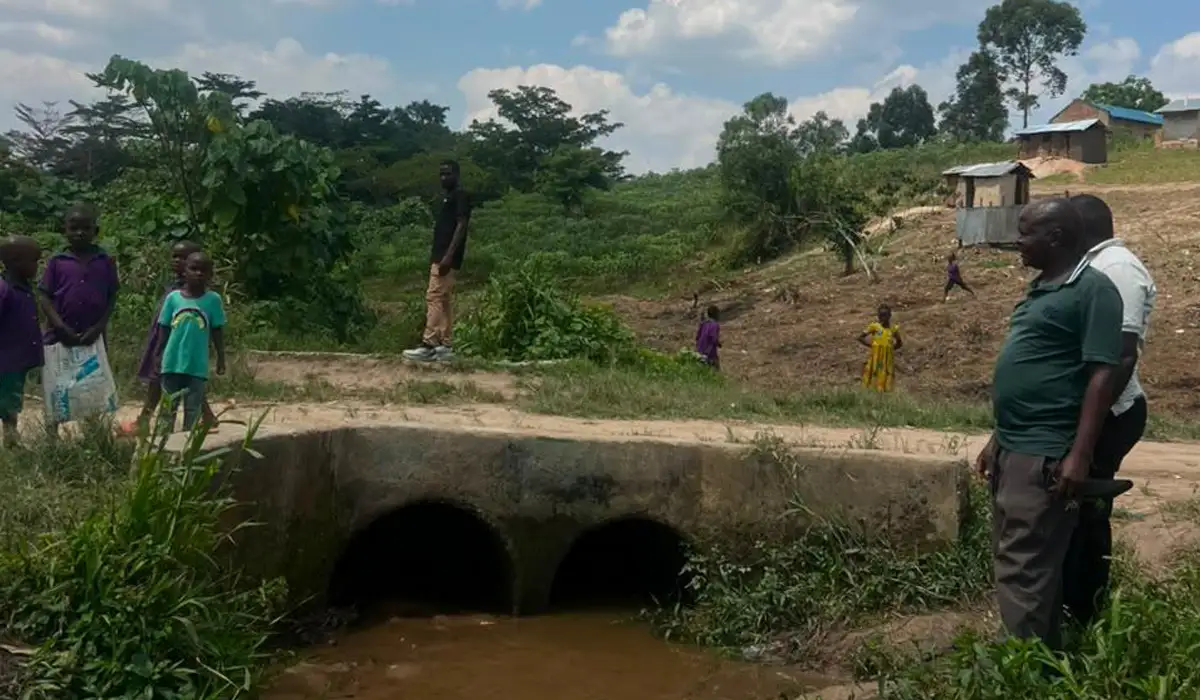
The intervention demonstrates how organised community groups can use their collective voice and partnerships to address development priorities that extend beyond their primary conservation objectives.
Beyond infrastructure development, the association has also created opportunities for members to improve their household incomes and financial security.
Through support from ECOTRUST’s Community Carbon Fund (CCF), members established an apiary where they keep bees and produce organic honey. Proceeds from honey sales are channelled into a revolving fund that provides members with small loans at affordable interest rates.
“Through the money we received from the Community Carbon Fund, our group bought beehives and started an apiary around the forest,” says Benon Bushoborozi, the group’s coordinator. “We sell honey and put the profits back into the group fund. Members can now get small loans when they have urgent needs at home.”
The revolving fund has provided members with an additional financial resource, demonstrating how conservation-related enterprises can support household needs while creating incentives for communities to protect their natural surroundings.
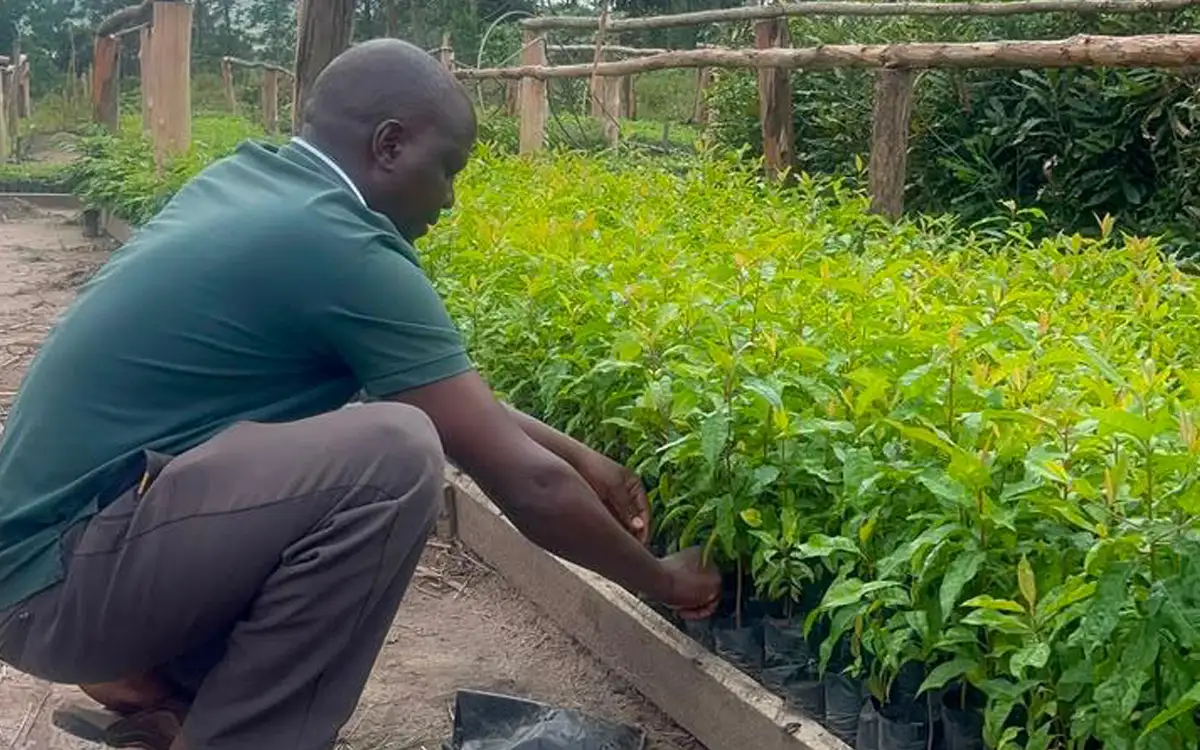
Individual members have also benefited from opportunities created through the conservation programme. Nelson Tugumanawe, the association’s assistant coordinator, joined the programme in 2014 and established a 1.5-hectare woodlot with 600 indigenous trees, including Prunus Africana, Khaya anthotheca, Warburgia ugandensis and Xanthoxylum gilletii.
“At the beginning, I collected wildlings and raised them in my small nursery. With time, the business grew as I started supplying farmers and ECOTRUST,” he says.
Today, Nelson supplies tree seedlings to farmers in several districts, including Kamwenge, Kitagwenda, Ibanda, Buhweju, Mitooma, Bushenyi, Ntungamo and Kasese.
Carbon payments received through ECOTRUST helped him establish a commercial tree nursery in Kiyanga. The business has since grown into an enterprise employing more than 10 young people in the community.
“I have raised over 400,000 tree seedlings. This business has changed my family’s life. It has supported my children’s education, and my eldest child is graduating from Makerere University next year in January,” Nelson says.
For members, the benefits of the programme go beyond income generation. The association has also strengthened their knowledge, confidence and ability to participate in community development.
“We are not only planting trees; we are also learning. Our partners train us on saving money, improving our incomes, and managing our households better. We also visit other communities to learn what is working well and bring those ideas back home,” says Bushoborozi.
He adds that the impact of the programme is reflected in improvements in members’ living conditions.
“At first, many members lived in grass-thatched houses. When carbon payments started coming in, people were able to improve their homes and put up iron sheets,” he says.
The association’s growth has also created opportunities for members to participate in local leadership. Bushoborozi currently serves as an LC5 councillor, while Nelson previously served as a local councillor before concentrating on his tree nursery business.
According to John Mirembe, the landscape coordinator, the association’s journey reflects the value of sustained community participation and commitment to conservation.
“In Mitooma District, we have two main groups, Bitereko Natural Beehive Products Association and Kiyanga Environmental Conservation Association. The pioneer farmers who started this journey are from this side, and their commitment has been amazing. You can see their dedication through everything they have built,” he says.
Even after losing some of the pioneer farmers who established the movement, their families have remained committed to protecting the trees planted years ago, ensuring that the conservation work continues across generations.
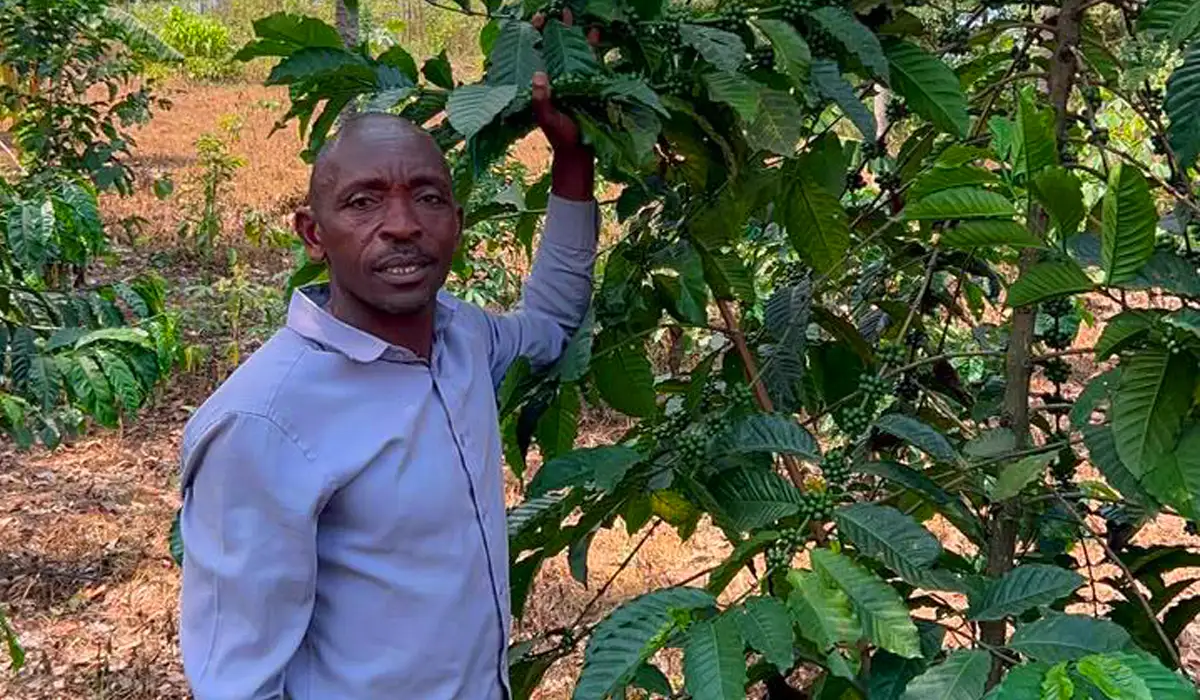
Today, the association brings members together every three months to review progress, share experiences and identify opportunities to strengthen their activities.
Through tree planting, financing, livelihood enterprises and community cooperation, the Kiyanga Environmental Conservation Association is demonstrating how environmental conservation can contribute to wider rural development.
Kiyanga’s experience demonstrates that when communities are empowered to take ownership of their natural resources, conservation can become a catalyst for improved livelihoods, stronger local leadership and sustainable community development.
