
For many communities living near forests, biodiversity is more than a conservation issue; it is the foundation of everyday life. Healthy forests provide clean water, medicine, food, pollination, and a stable climate. They also create opportunities for communities to earn a living when natural resources are managed responsibly.
This is the approach that The Environmental Conservation Trust of Uganda (ECOTRUST) is promoting in Alimugonza Communal Land Association in Masindi District, where protecting biodiversity is directly improving livelihoods while strengthening community ownership of natural resources.
According to Jonathan Odongo, the Biodiversity Programme Officer at ECOTRUST, people depend on nature for survival, making biodiversity conservation essential not only for communities living near forests but for everyone.
“As human beings, we survive on nature,” he explains. “Biodiversity is also an important source of livelihood for communities when they are trained on how to use it sustainably.”
In Alimugonza, one of the biggest income-generating activities supported by ECOTRUST is beekeeping. However, Odongo explains that successful beekeeping depends entirely on a healthy forest ecosystem.
“The bees need flowering trees to collect nectar and pollen so they can produce honey. When the forest is protected, the bees thrive, honey production increases, and the community earns more income,” he says.
Beyond honey production, the Alimugonza Forest is home to chimpanzees, baboons, and more than 60 bird species. This rich biodiversity has opened another economic opportunity for the community through an innovative conservation financing mechanism known as biodiversity credits.
Biodiversity credits reward communities that actively protect ecosystems and wildlife. Instead of earning income by exploiting forests, communities benefit financially by conserving them.
Odongo explains that the amount of income earned depends on how healthy and diverse the forest remains. “Because the community is protecting this forest, they are able to benefit from biodiversity credits. Monitoring helps measure how much biodiversity is being conserved, and that forms the basis for how much income the community receives.”
To accurately assess the health of the forest, ECOTRUST supports two complementary monitoring systems.
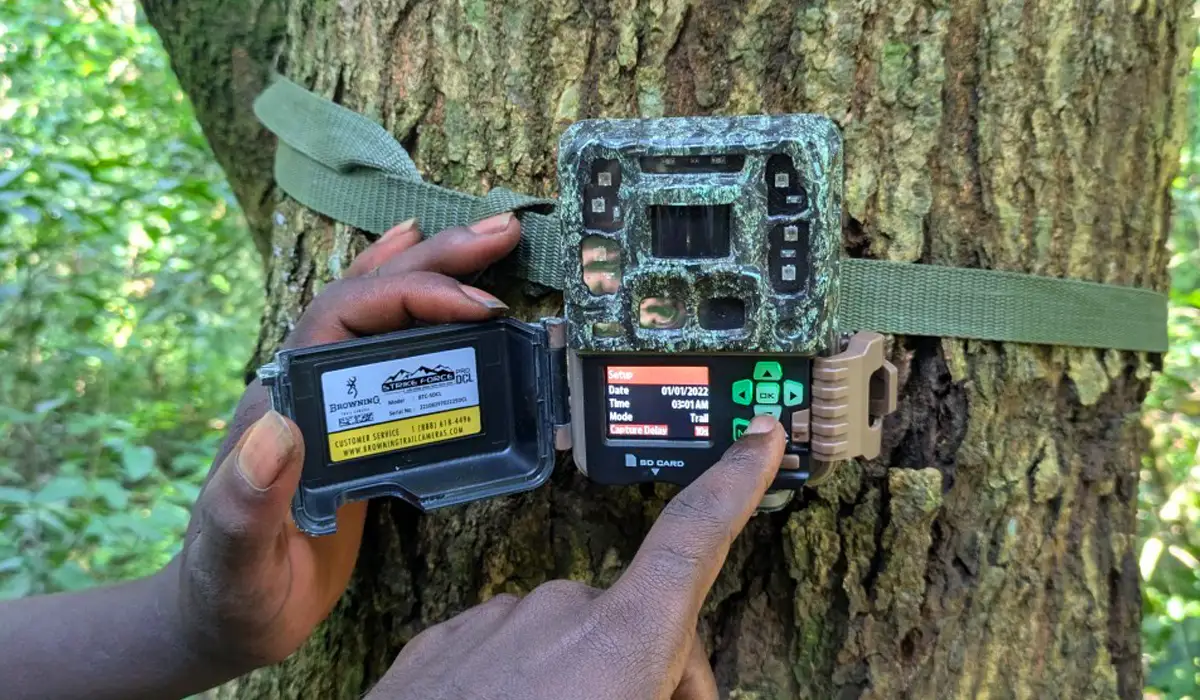
The first is automated monitoring, which uses camera traps and audio moth devices placed strategically throughout the forest. Camera traps silently capture photographs of wildlife without disturbing their natural behaviour, while AudioMoth devices continuously record sounds made by birds, insects and other animals throughout the day and night.
These technologies provide experts with detailed information about the species living in the forest and the condition of their habitat. The data is then analysed using a five-pillar biodiversity metric that measures both species diversity and forest health.
The second method is community-led transect monitoring. Every month, trained community members walk through the forest recording birds, animals, plants, and any threats such as illegal logging or forest degradation.
Odongo says involving the community is one of the programme’s biggest strengths. “It creates ownership. When people understand what they are protecting and why it matters, they become committed to protecting the forest.”
The monitoring data collected through both systems is used to assess the health of the forest. It measures the number of species, the condition of the habitat, and how natural the forest remains. This information forms the basis for biodiversity credits, allowing communities to earn income while protecting nature.
ECOTRUST has also introduced a community diary where members record important events affecting the forest, including illegal logging, crop-raiding wildlife, and other conservation challenges. These records provide evidence that can be shared with local authorities and help guide restoration work where necessary.
For ECOTRUST, biodiversity conservation goes hand in hand with climate resilience and better livelihoods. Communities continue benefiting from forests through water, medicinal plants, honey production, and other natural resources while ensuring they remain available for future generations.
Hannan Ndiroraaho, the Chairperson of Alimugonza Communal Land Association, says the community’s understanding of conservation has changed greatly since ECOTRUST introduced biodiversity monitoring.
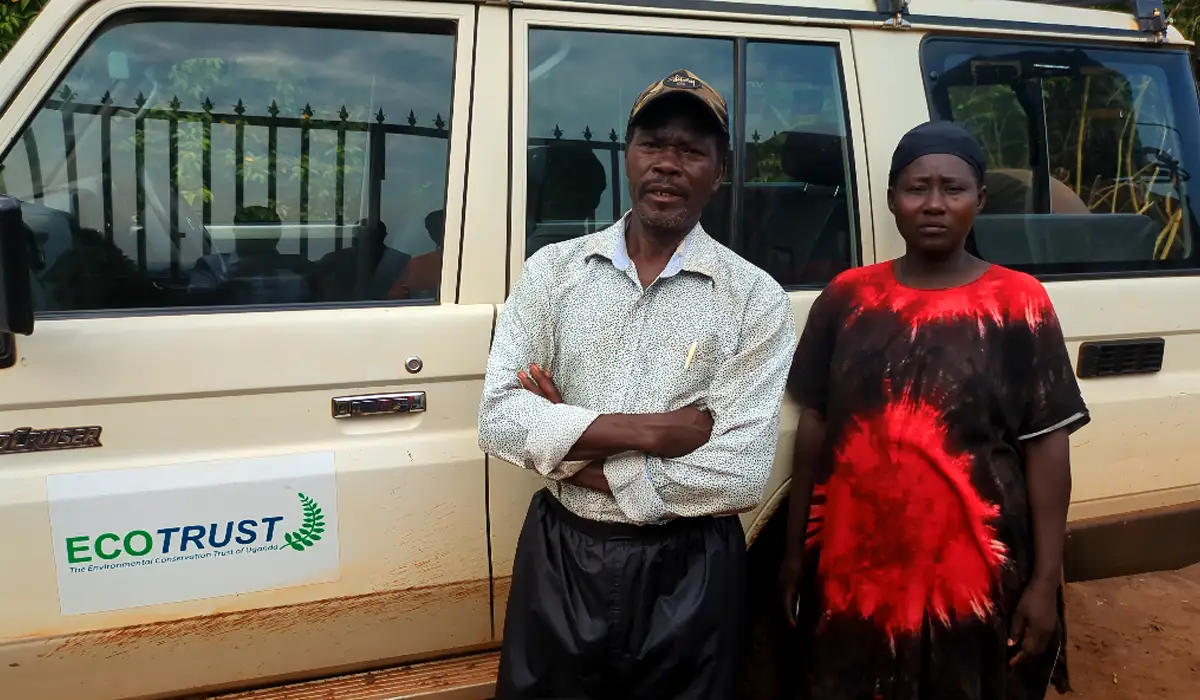
“Before ECOTRUST came in, we were only patrolling the forest to stop people from cutting trees. We did not know the different animals, birds, or trees that were inside our forest. Now we monitor biodiversity using both community monitoring and equipment like camera traps and audio-moths,” says Ndiroraaho.
Today, community members follow three established monitoring trails across their 75-acre forest. Working in different teams, they monitor birds, mammals, plants, and threats while also checking the automated monitoring equipment installed in the forest by ECOTRUST.
According to Ndiroraaho, the monitoring has helped the community understand their forest much better. “We now know exactly which birds, animals and trees are in our forest. We also know which animals come during different seasons. For example, we have recorded chimpanzees, baboons, monkeys, squirrels and even buffaloes during the dry season. Before, we never had this information.”
The biodiversity programme has also encouraged young people and women to take part in conservation. Ndiroraaho says many youths have been trained to install camera traps, monitor biodiversity, and support other communities with beekeeping activities.
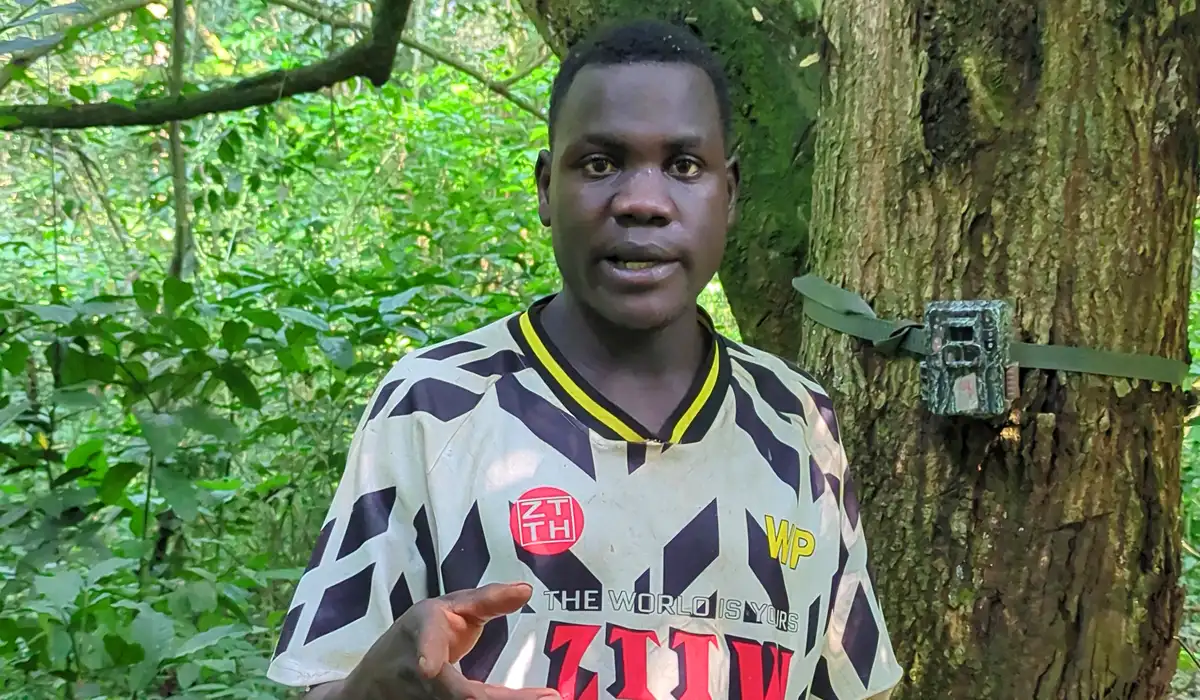
“ECOTRUST trained us to develop a business plan for beekeeping. We learned that beekeeping is a forest-based enterprise because bees depend on healthy forests. Now we understand that conserving the forest and improving our livelihoods go together.”
The community continues monthly monitoring to ensure the forest remains healthy. By recording wildlife, plants, and threats, members are helping conserve one of Masindi’s valuable forest ecosystems.