
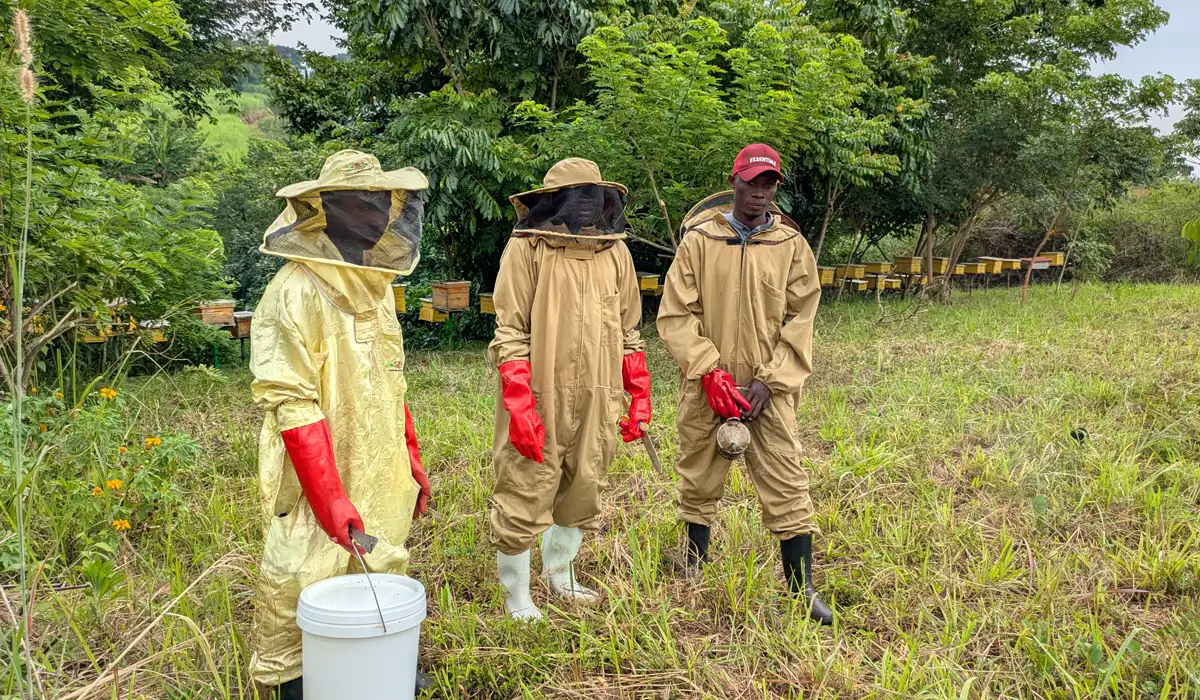
What was once a heavily degraded forest in Rwentumba Village, Kimanya Parish, Masindi District, is slowly coming back to life. Thanks to the efforts of the Rwentumba Communal Land Association (CLA) in protecting the Rwentumba community forest while earning an income through modern beekeeping, as supported by The Environmental Conservation Trust of Uganda (ECOTRUST).
The association was formed after communities living around the forest were mobilised and sensitised about the importance of conserving natural forests. Residents were encouraged to work together to restore the degraded forest instead of continuing to clear it for farming (sugarcane plantation).
Today, the community manages about 280 acres of forest, which is named after River Rwentumba, a small tributary that eventually feeds into Lake Albert.
According to Christopher Byamukama, the Project Coordinator of the Rwentumba Communal Land Association, the community understood that restoring the forest would take time, so they needed an activity that could provide income while protecting the environment.
“When we looked at tree planting, we realised the benefits would take many years because trees need 10 to 15 years to mature. We needed something that could give us income earlier while encouraging us to conserve the forest,” said Byamukama.
With support from ECOTRUST through the Mobilising More 4 Climate (MoMo4C), the association explored several livelihood options, including fish farming and tree nurseries. After careful consideration, members chose beekeeping.
“We selected beekeeping because it required less investment, we already had some basic knowledge, and the forest provides plenty of flowers and plants that bees need for food,” Byamukama explained.
The journey started in 2020 when the group received 10 Kenya Top Bar (KTB) beehives and training in modern beekeeping. Although they initially faced challenges with termites destroying the wooden hive stands, additional training helped the farmers improve hive management and protect their equipment.
Later, in 2023, the association received 100 modern Langstroth hives, bringing the total to 110 hives.
Byamukama says the Langstroth hives have greatly improved honey production.
“The Langstroth hives are easier to inspect, easier to harvest, and they produce honey much faster. On average, one hive can produce about 10 kilograms of honey every harvest, and we harvest after every three months,” he said.
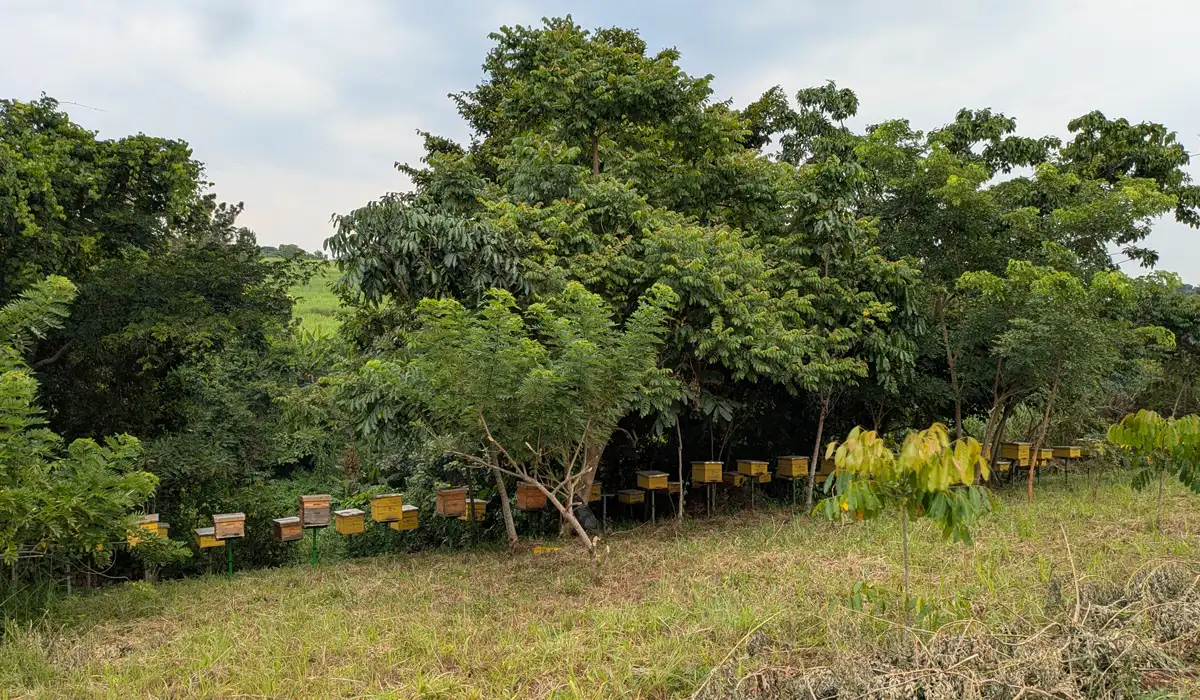
ECOTRUST also trained members on proper honey harvesting, processing and storage to ensure the honey meets quality standards.
Instead of using traditional methods that often destroyed bee colonies, farmers now use protective clothing, smokers, and honey extractors to harvest honey safely without harming the bees.
“Everything we are doing today is knowledge we received through the training. We learnt how to manage the bees, harvest clean honey and store it properly to maintain quality,” Byamukama added.
After harvesting, the honey is filtered, packed in clean white jerrycans and stored on raised wooden platforms to prevent moisture from affecting its quality.
The association has also secured a reliable market through a partnership between ECOTRUST and The Hive Limited, which buys the community’s honey and supplies it to consumers.
Umar Buyinza, who works with The Hive Limited, says the partnership has helped farmers move beyond production to accessing a dependable market.
“The partnership started with providing hives, equipment and training. Today, the farmers also have a ready market because they supply their honey to The Hive Limited,” Buyinza said.
Beyond improving household incomes, the project has brought visible environmental benefits. Community members say rainfall has improved, water levels in nearby rivers have increased, and wildlife is gradually returning to the restored forest.
Christopher recalls that restoring the forest required cooperation from many landowners who agreed to give up portions of their land for conservation.
“People understood that conserving the forest would benefit everyone. It was a win-win situation because we restored the forest while still allowing families to use part of their land,” he said.
Today, the Rwentumba Communal Land Association demonstrates that conservation and livelihoods can go hand in hand. By protecting their forest and embracing sustainable beekeeping, the community is creating a healthier environment while building a more secure future for generations to come.