
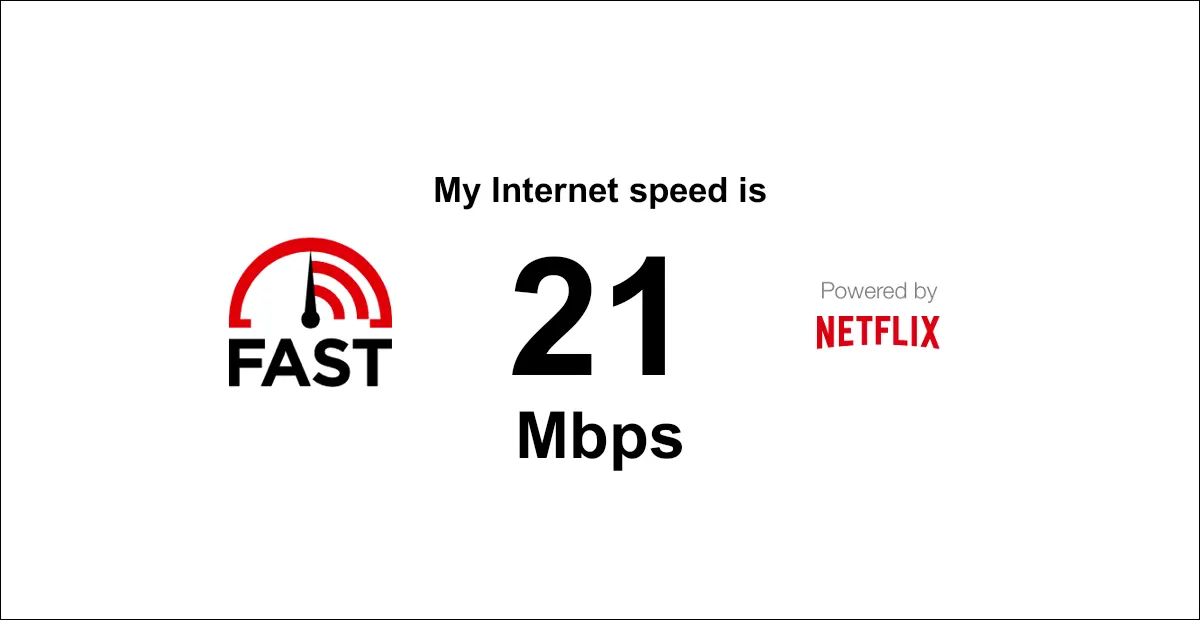
A simple web page, such as entering ‘dgjcvfdbrtsvj’ in the URL, taking forever to load, is the clearest sign that something is off, and that your internet speed is seriously misbehaving. Instinctively, you run an internet speed test. The usual options? Google’s M-Lab, Ookla’s Speedtest, and Netflix’s Fast.com. Among these three, Fast.com is likely to give you results that… don’t quite add up. Let me explain why.
Fast.com was not designed to measure your overall internet speed. Its origin story traces back to a very specific issue Netflix encountered between 2014 and 2016. At that time, internet service providers in the United States were intentionally slowing down Netflix traffic. Streams buffered, customers complained, while ISPs blamed Netflix for poor performance. Behind the scenes, Netflix had to pay major providers like Comcast, Verizon, AT&T, and Time Warner for direct connections to their networks. Even after paying, the public still blamed Netflix when videos lagged.
This pushed Netflix to seek a more reliable solution, one that could reveal the truth behind the slowdowns to its users without resorting to complex technical explanations. In 2016, they launched Fast.com with an intentional narrow focus to measure the internet speed between your device and Netflix’s own servers.
The trick is that Fast.com doesn’t test how fast you can load other websites, download and upload files, or stream on other platforms; it only focuses on one path: Netflix traffic. If your ISP throttles Netflix, Fast.com will show it. Even when other websites and apps are working fine, a slow Fast.com result points to Netflix traffic as the issue, which is why its numbers are often inaccurate.
This approach was revolutionary because it gave Netflix’s customers a simple tool to point fingers at the real culprit: the ISP. Whenever someone complained about buffering, Netflix told them to “run Fast.com,” a slow result that points to the ISP, not Netflix. With proof of where the bottleneck was, millions of Netflix users could see the truth for themselves, and ISPs could no longer hide behind general internet speed claims. Looking back, Netflix positioned itself as a transparent company before its viewers, while ISPs came across as greedy gatekeepers throttling traffic for profit.
Today, this history explains why Fast.com often feels “inaccurate.” It’s not wrong; it’s deliberately narrow. It was never intended to replace tools like Speedtest.net or M-Lab. Fast.com’s goal is to reveal how your ISP handles Netflix traffic specifically. That’s why the number it gives can seem misleading compared to other speed tests; it’s only testing one path out of many.
There you have it. The next time Fast.com shows a higher or lower speed than expected, remember: it’s not failing. It’s doing exactly what Netflix built it for, showing whether your ISP is playing fair with the world’s biggest streaming platform. In the story of Netflix’s corporate battle, that one simple website was enough to change the conversation, prove a point, and win trust with millions of users.
