
In an effort to combat environmental degradation and uplift the livelihoods of communities, the Government of Uganda (GoU), through the Ministry of Water and Environment (MWE), with financing from the World Bank (WB), designed the Investing in Forests and Protected Areas for Climate-Smart Development (IFPA-CD) Project. The project’s overall objective is to improve the sustainable management of forests and protected areas while increasing the benefits that surrounding communities derive from forests within targeted landscapes.
Component 3 of the project specifically focuses on refugee-hosting areas and is funded under the Refugee Sub-Window of the International Development Association’s (IDA) 18th funding round. The component promotes the establishment of tree cover in landscapes outside protected areas, contributing to sustainable forest management, enhanced landscape resilience, and improved livelihoods for both refugee-hosting and surrounding communities on private and customary lands.
Under this framework, the Intensive Mixed-Use Agroforestry Systems on Household Plots (MAS) Project was launched at the beginning of 2025 and is scheduled to conclude in June 2026. The innovative two-year initiative is designed to increase the adoption of intensive mixed-use agroforestry practices across 19 targeted districts in Western and Northern Uganda, particularly in communities hosting refugees or located within a five-kilometre radius of refugee settlements.
ECOTRUST is leading implementation in five project districts, while Catholic Relief Services (CRS) and the International Centre for Research in Agroforestry (ICRAF) oversee implementation in the remaining districts. Although the MAS project is set to end in June 2026, ECOTRUST will continue engaging farmer beneficiaries to ensure the long-term survival and management of the trees planted, including onboarding them into the existing Trees Grow Back (TGB) Project to sustain the project’s impact beyond its implementation period.
By integrating trees, crops and livestock, the project aims to transform traditional farming systems, enhance land productivity, restore degraded ecosystems, improve food security, and secure sustainable livelihoods.
Central to the sustainability of this forest conservation initiative is providing farmers with viable, alternative sources of income. To achieve this, the Environmental Conservation Trust of Uganda (ECOTRUST), in partnership with Catholic Relief Services (CRS), is implementing a crucial component of the project: supporting selected “model farmers” in various parishes, including Palabek Nyimur, Palabek Kal, Aceba and Agora.
Beyond tree planting, ECOTRUST is committing to long-term community resilience by helping farmers branch into diverse business ventures, such as livestock farming, beekeeping, honey production, and shea nut and oil processing.
“The selected model farmers are our pioneers,” explains Lamwaka Grace, ECOTRUST’s project coordinator, Lamwo District. “We hope to work with them as they improve their livelihoods and inspire those around them in the community. This initiative enables our farmers to have alternative sources of income while they actively conserve the environment,” she adds.
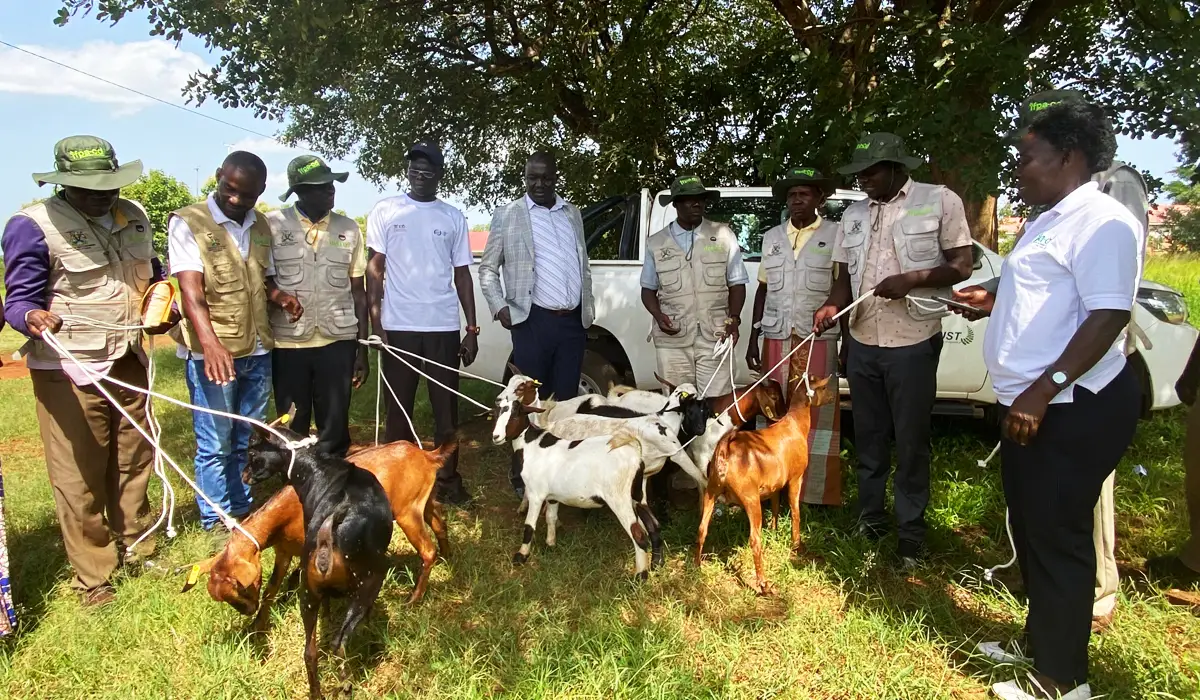
To boost their livelihoods, model farmers have been provided with ruminant animals, specifically goats, to serve as a direct reward and incentive, directly improving household wealth as farmers continue their reforestation efforts.
The success of the project rests on the deep local expertise of its participants. The selected model farmers possess extensive knowledge of indigenous crops, livestock, and tree species perfectly adapted to local climate and soil conditions. Furthermore, they demonstrate strong community leadership, environmental stewardship, and a long-term commitment to the project’s success.
Among these pioneers is Alice Achan, a dedicated tree grower from Agora sub-county. Working with ECOTRUST, Achan has already planted more than 1,760 trees, blending white teak (indigenous timber) and various fruit trees.
For Achan, the addition of livestock to her farm is changing life.
“When these animals grow and multiply, I will sell them to help pay school fees for my children and take care of the family,” Achan says. “I will also be in a better position to get more money to reinvest in and support my farming.”
A core pillar of the IFPA-CD project is its strict commitment to gender equality and social inclusion. In many rural hosting communities, women bear the brunt of agricultural labour but rarely see the financial rewards or decision-making power.
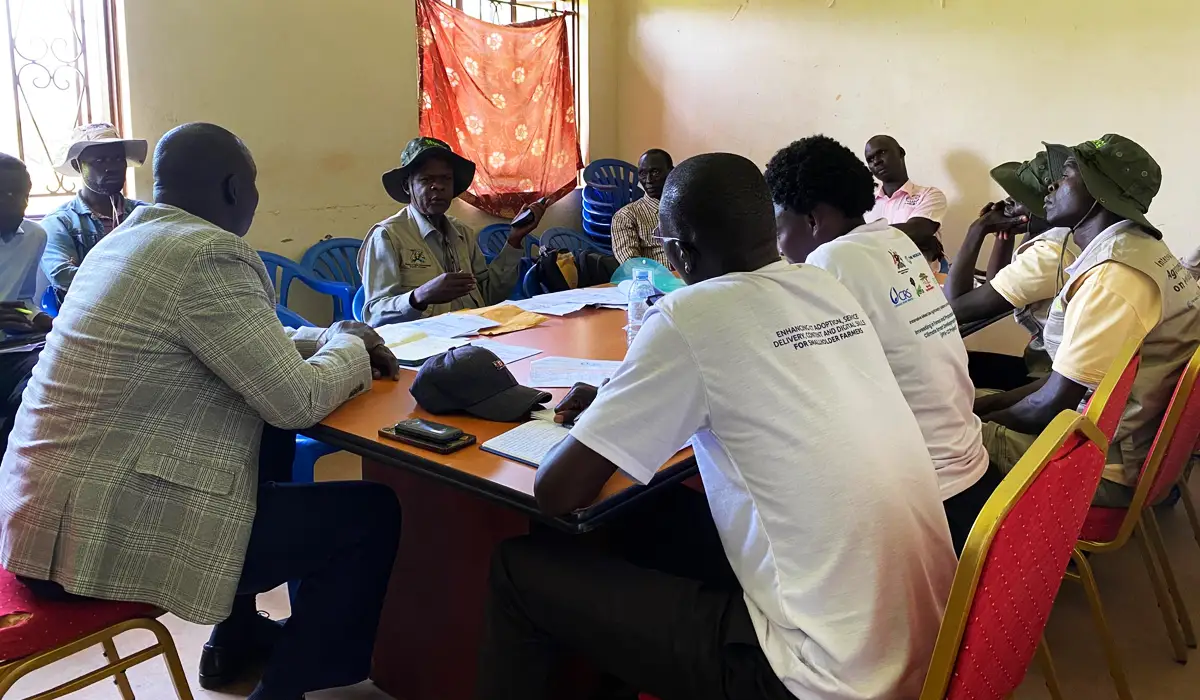
According to Odong Cosmos, the Assistant District Veterinary Officer (DVO), prioritising women in this project is not just fair; it is economically vital for the region.
“Gender sensitivity in this project is crucial,” Cosmos notes. “In our community, a disproportionate amount of work has historically been left to women. Therefore, more women need to be actively involved in projects like this, ensuring they can directly improve their own livelihoods as well as those of their families.”
While the official mixed-use agroforestry project is a time-bound, two-year initiative, local leaders are confident that its impact will endure. The strong institutional presence of organisations like ECOTRUST ensures that communities will not be abandoned when the initial project cycle ends.
“We have been working closely with ECOTRUST to protect the environment and support local livelihoods through different projects,” says Justine Peace Odur, the Chairperson LC4 of Lamwo district. “Even with the eventual closure of this specific program, I am confident that ECOTRUST will continue its monitoring and support of the farmers in this region.”
By blending ecological restoration with real financial incentives, the IFPA-CD project, Intensive Mixed Use Agroforestry Systems on household Plots, is laying down deep roots for a climate-resilient future in Uganda’s most critical landscapes.