
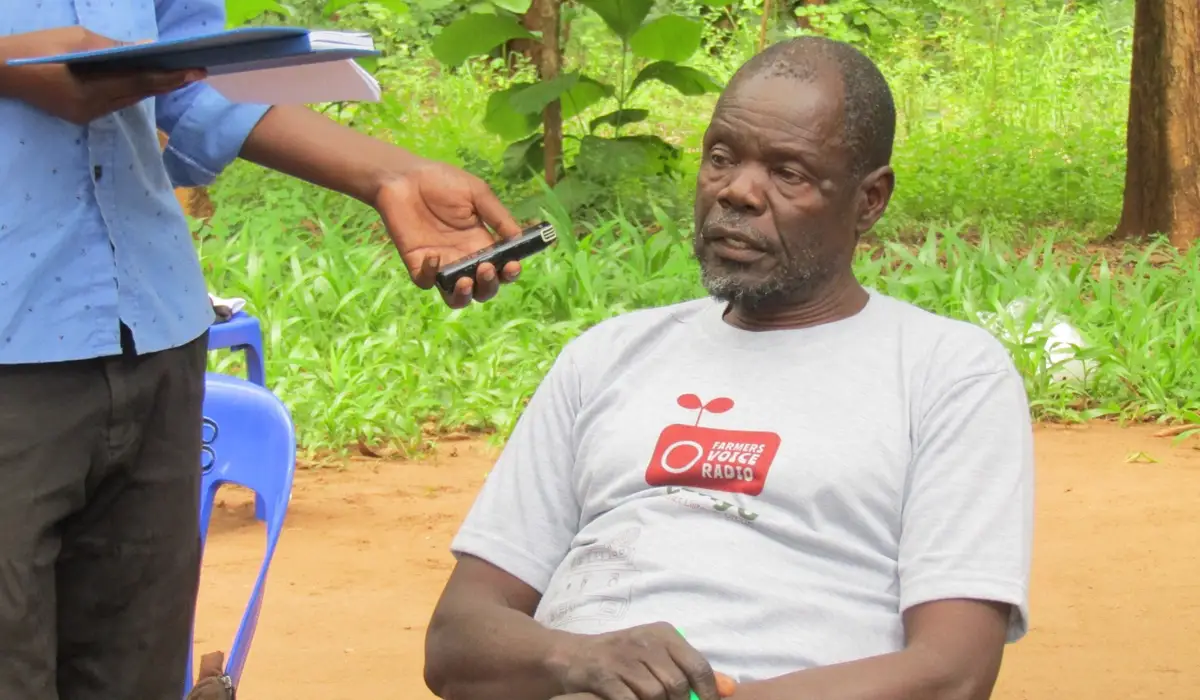
In the remote villages of the Agoro-Agu Landscape in Northern Uganda, radio is proving to be a significant tool for social transformation. Through the Transformative Approaches to Sustainable Landscapes and Livelihoods (TASLL) Project, implemented by ECOTRUST with funding from the Foreign Commonwealth & Development Office (FCDO), rural communities are tapping into the power of the Farmers’ Voice Radio (FVR) methodology, using short focused radio broadcasts, interactive call-ins, and community group meetings to share vital knowledge and find solutions to common social, economic, environmental, and technical challenges in their societies.
The Farmers’ Voice Radio methodology, designed by the Lorna Young Foundation (LYF), is a participatory radio intervention that provides accessible, farmer-led content particularly in remote areas where communities lack access to extension support and training interventions.
Lapat Jimmy, the Chairman of the Mar-Lonyo Group in Kitgum district, is a leader whose journey from fragmented farming to a thriving enterprise showcases the profound impact of Farmers’ Voice Radio (FVR). Through consistent listening, structured accountability, and a willingness to innovate, he has not only redefined his household’s financial trajectory but has also galvanised an entire community toward a sustainable, collective future.
Before the introduction of the FVR program – Mar-Lonyo – which translates to “Love is Wealth,” Lapat was no stranger to hard work, having already participated in forestry. However, passion without technical expertise often leads to disappointing results. He lacked the fundamental knowledge required to properly manage his woodlots, a gap that frequently resulted in damaged trees and severe financial losses.
The turning point came through FVR’s dedicated modules on silviculture and modern agroforestry. Through the program, he mastered the precise techniques of pruning, learning how to cleanly remove branches to encourage straight, high-value timber growth without causing structural or disease-inducing damage to the trees.
Beyond forestry, the radio program challenged deeply ingrained environmental habits. Like many in the region, the standard practice for clearing agricultural debris was burning, a method that destroys soil microorganisms and releases harmful carbon into the atmosphere. FVR introduced a shift toward sustainable waste management.
Instead of setting fire to crop residues, Lapat learned to aggregate organic waste, allowing it to naturally decompose into nutrient-rich humus. This practice has restored his soil fertility, retained critical moisture, and boosted his overall crop yields.
The economic rewards of adopting these evidence-based practices were swift and life-changing. As his agricultural production soared, his profit margins expanded dramatically.
This income enabled him to secure his family’s long-term financial security through three major investments, including land to expand his agricultural footprint and scale up production; a grinding machine to establish a localised agro-processing hub and capture value within the community; and a motorbike to overcome rural transport challenges and move goods easily.
Crucially, this financial growth was accompanied by a powerful shift in household gender dynamics. The radio program’s regular focus on family inclusivity and gender-smart business management deeply altered his perspective on partnership.
Rather than managing the family finances in isolation, he actively integrated his wife into the core of the agribusiness. Today, she spearheads the farm’s value-addition initiatives, transforming dried sim sim (sesame seeds) into high-demand, profitable sim sim cakes. This collaborative approach has not only diversified their income streams but has permanently cemented his belief that true agricultural wealth relies on the active, respected involvement of women.
As a leader, the Chairman’s personal success is directly intertwined with the progress of the Mar-Lonyo Group. Under his guidance, the group has transitioned from a simple social gathering into a structured economic powerhouse.
A foundational lesson that revolutionised their operations was the concept of collective farming and bulk marketing. Historically, individual smallholders in the region faced severe exploitation by middlemen due to low individual volumes. By organising the group to aggregate their harvests and sell in bulk, they successfully bypassed predatory brokers, commanded significantly higher market prices, and unlocked previously inaccessible commercial markets.
To maintain this momentum and ensure continuous learning, the group meets monthly through sessions that are highly prioritised by the community.
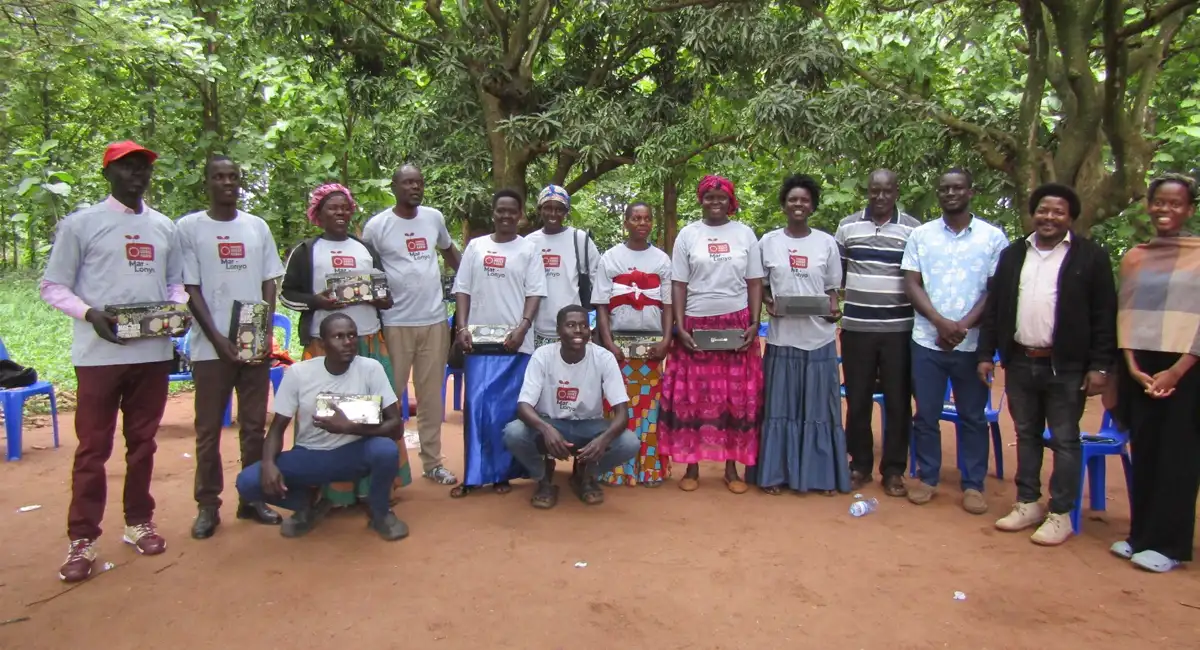
“The farmers make it a point to attend the monthly meeting to meet and discuss the topics that are important to them and other farmers in the region,” the Chairman notes. These gatherings serve as a vital forum to address critical cross-cutting issues, ranging from sustainable land management and tree planting to deep conversations surrounding Gender-Based Violence (GBV).
What sets the Mar-Lonyo Group apart is its rigorous approach to knowledge retention. To bridge the gap between hearing advice and implementing it, every farmer maintains a reflective diary.
These diaries serve as localised tracking tools, ensuring that members implement the agricultural techniques discussed each month. This structured accountability framework guarantees that the knowledge broadcast over the radio translates into practical, measurable improvements on the ground.
As the formal Farmers’ Voice Radio program prepares to wrap up its broadcast cycle in June, many might worry about the sustainability of these rural initiatives. However, the Mar-Lonyo Group has built a foundation designed to outlast any external funding.
To ensure their long-term unity and financial independence, the group has established a shared commercial enterprise called Mar-Lonyo Beekeeping. This communal apiary business serves a dual purpose: it generates a steady stream of collective revenue and acts as a permanent social anchor that keeps the group bound together.
Looking forward, the group is preparing to transition from an informal association into a legally recognised entity. “We shared phone contacts of each other, and this business will enable us to always meet and discuss important issues that will help us to grow,” the Chairman explains. “We are in plans of having it formally registered.”
Through the power of targeted radio programming, the Chairman has seen his social standing elevate to one of deep community respect. More importantly, he has helped to lead the group for rural prosperity, one where environmental stewardship, economic unity, and family partnership ensure that the Mar-Lonyo Group will continue to thrive for generations to come.