
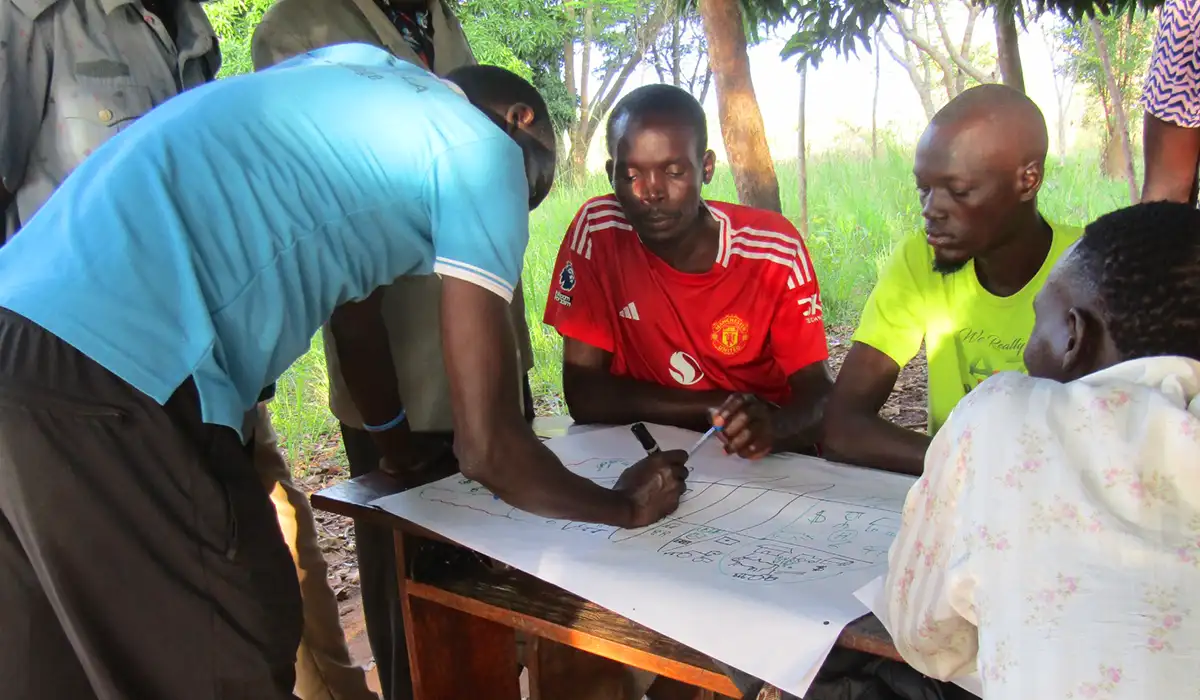
For 27 years, the Environmental Conservation Trust of Uganda (ECOTRUST) has been at the forefront of national restoration efforts, championing tree-planting initiatives across the country. However, planting trees is only the beginning; ensuring they stay standing requires a sustainable approach.
To bridge the gap between conservation and daily survival, ECOTRUST employs a powerful threefold strategy aimed at empowering community members to create eco-friendly businesses that generate income while the forests mature. By transforming conservation into a viable source of livelihood, local communities no longer have to rely on deforestation to survive.
In Northern Uganda, this vision is coming to life through two local collectives: the Acung Kedi Beekeeping Group and Orii United Beekeeping Group. Recently, these groups underwent intensive training designed to help them map out both collective business goals and individual life aspirations.
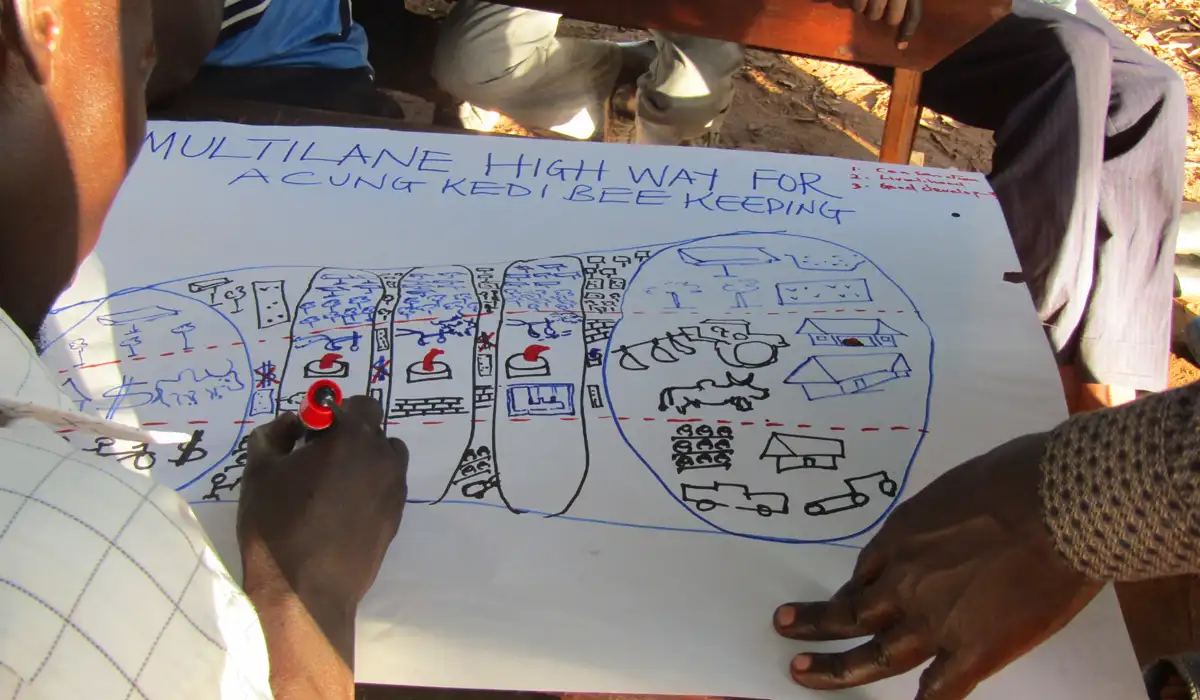
Using the Gender Action Learning Systems (GALS) structured approach, ECOTRUST ensured that both men and women were equally involved in drawing up their Vision Road Journeys. This inclusive tool allows community members to create clear, long-term sustainability goals, identify potential opportunities and structural challenges, develop practical, community-led solutions, and monitor and assess their own progress over time.
By centring women in these discussions, the program directly tackles deep-rooted myths and gender barriers. Traditional beekeeping has historically sidelined women due to the heavy, labour-intensive nature of hanging traditional hives high in trees. The GALS framework ensures women have an equal seat at the table as the community transitions to safer, more accessible modern technologies.
The logic behind the initiative is simple yet profound: give people a reason to value living trees over timber.
“It is very important for these farmers to have alternative livelihood options because most of them depend on the trees for charcoal, making traditional beehives, and clearing land for commercial farming,” explains Priscilla Nabuyemba, the Business Development Officer representing ECOTRUST.
“But if they have options to obtain income, such as beekeeping, while leaving the trees standing, it creates a win-win situation for the trees and the surrounding ecosystem,” She adds.
Northern Uganda’s natural environment is exceptionally well-suited for apiculture. To capitalise on this, ECOTRUST is partnering with Hive Uganda to help farmers transition from decades of subsistence-level traditional practices into a thriving, highly commercialised enterprise.
The next phase of the intervention involves hands-on, technical training. ECOTRUST experts will support the farmers in constructing model apiaries. These sites will feature a mix of both traditional and modern beehives, serving as living classrooms where farmers will learn the ins and outs of hive management, safe honey harvesting, the use of protective gear, post-harvest handling, and value addition.
However, establishing a communal business requires a solid foundation. Farmers were urged to carefully discuss and allocate land for these model apiaries to prevent future land disputes that could disrupt their progress.
Fortunately, the community spirit is strong. Stephen Ojok, the secretary of the Acung Kedi Beekeeping Group, noted that the training reshaped his entire outlook.
“By learning about the vision road journey, I now have a vision to upgrade from local beehives to modern ones, and to build a permanent house to replace my grass-thatched home,” Ojok shares.
Demonstrating his commitment, Ojok has offered up his own land for the project. “The land here is customary, so I do not think we will face disputes. I personally have land that I am willing to provide for the business.”
The impact of this training is already rippling through individual households. Christine Abalo, another member of the Acung Kedi group, eyes a brighter, more independent future.
“The training has enabled me to get knowledge that I will apply in the future. I believe that I will also be in a position to establish my personal business in addition to the group enterprise. This will help reduce the rate of poverty at home,” Abalo says.
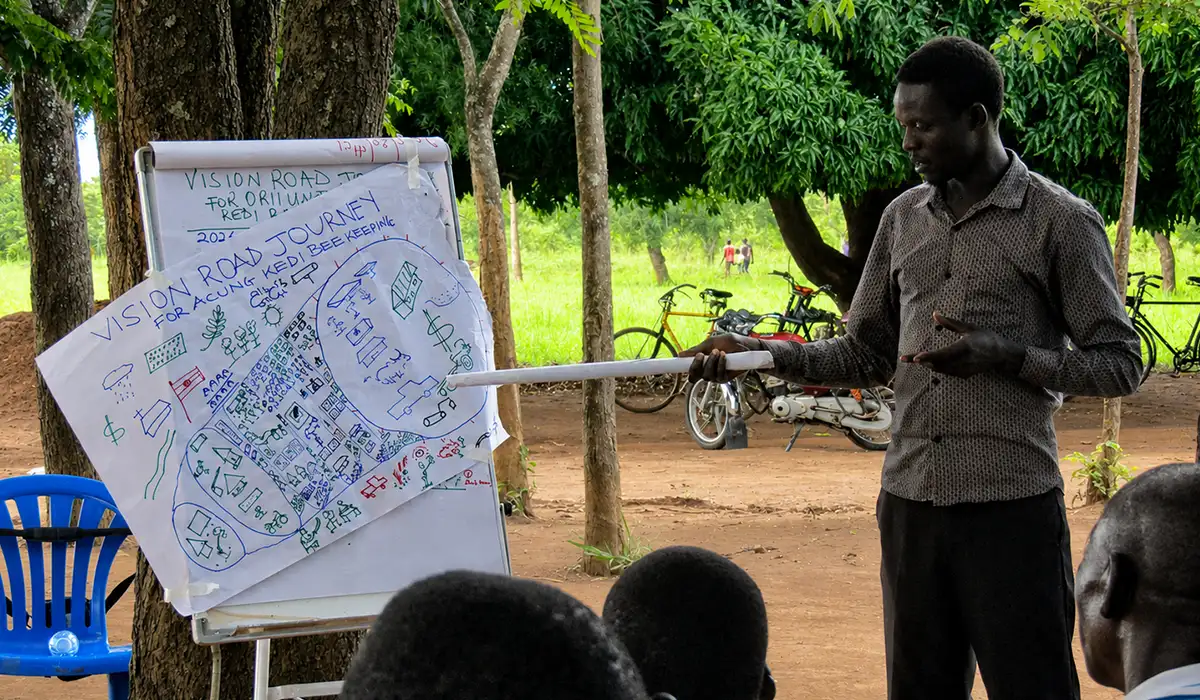
Originally brought together by ECOTRUST under the Transformative Approach to Sustainable Landscapes and Livelihoods (TASLL) Project in Northern Uganda to promote planting of native trees in the region as simple tree growers, the members quickly realised the economic power of solidarity. As a collective, they anticipate much stronger market accessibility and better bargaining power for their premium honey products.
ECOTRUST’s commitment to these farmers remains long-term. Through continuous technical guidance, modern technology integration, and direct links to lucrative markets, this initiative is proving that communities don’t have to choose between earning a living and protecting the planet.