
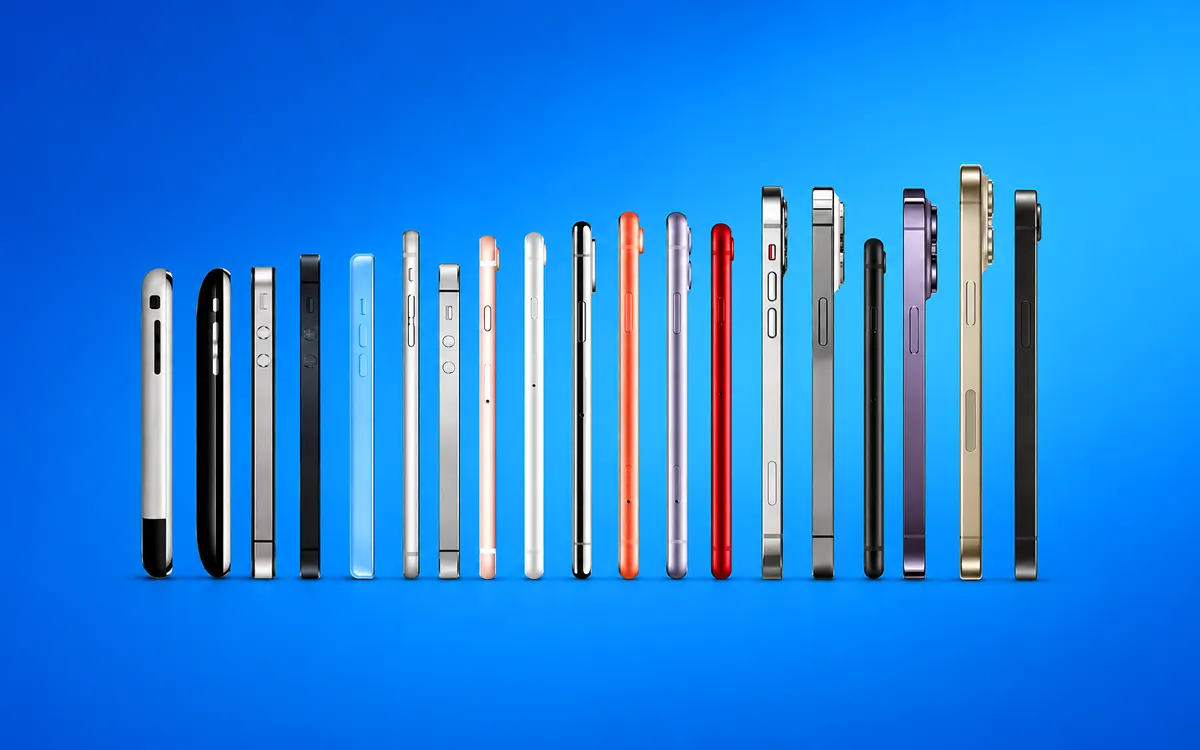
Listing all iPhones in order of release and highlighting each model’s key features and commonly raised issues, this compilation draws primarily on information from credible tech websites, Reddit and YouTube reviews by channels such as MKBHD, Mrwhosetheboss, Unbox Therapy, and JerryRigEverything.
June 2007 – iPhone 2G: Apple’s first smartphone, the first-generation iPhone, introduced multi-touch and changed the industry. Issue: No App Store, no 3G, slow EDGE internet, no video recording, limited storage, and battery replacement required professional service.
July 2008 – iPhone 3G: It had 3G connectivity and the App Store. Issue: Noticeably slow performance on iOS 4, weak camera, plastic back prone to cracking, and limited RAM for frequent app reloads.
June 2009 – iPhone 3GS: Improved speed and introduced video recording. Issue: Battery degraded over time, overheating during heavy use, and later iOS versions noticeably reduced overall responsiveness.
June 2010 – iPhone 4: Introduced the Retina display and premium glass design. Issue: “Antennagate” caused signal loss when held a certain way, while the glass front and back shattered easily.
October 2011 – iPhone 4S: The iPhone 4s introduced Siri and a faster processor. Issue: Battery life disappointed many users, and some experienced Wi-Fi or Bluetooth hardware failures after extended use.
September 2012 – iPhone 5: Larger display with a thinner aluminium body and Lightning port. Issue: Scuff-prone black finish, weak battery, and power button failures became common over time.
September 2013 – iPhone 5c: Colourful plastic version of the iPhone 5. Issue: Plastic body scratched easily, lower resale value, and limited storage options.
September 2013 – iPhone 5s: iPhone 5s introduced Touch ID and the 64-bit A7 chip. Issue: Battery ageing became noticeable, Touch ID occasionally failed after wear, and only 1GB RAM limited future performance.
September 2014 – iPhone 6: Launched with a thinner design and a larger display. Issue: “Bendgate” raised durability concerns, including “Touch Disease” touchscreen failures after repeated bending.
September 2014 – iPhone 6 Plus: First large-screen iPhone. Issue: More susceptible to bending than the iPhone 6, more prone to Touch Disease.
September 2015 – iPhone 6s: Stronger aluminium and 3D Touch debuted. Issue: Early batteries were recalled due to unexpected shutdowns, and base model storage started at a restrictive 16GB.
September 2015 – iPhone 6s Plus: Large display with optical image stabilisation. Issue: Heavy design, battery degradation over time, and expensive display repairs after accidental drops.
March 2016 – iPhone SE (1st Generation): Compact body with iPhone 6s performance. Issue: Small battery, tiny 4-inch display by modern standards, and ageing camera hardware.
September 2016 – iPhone 7: Removed the headphone jack and added water resistance. Issue: Audio IC hardware fault caused microphone failure, greyed-out speakerphone, and Voice Memos to stop working. The non-clickable Home button on iPhone 7 took users time to get used to.
September 2016 – iPhone 7 Plus: Dual-camera system introduced Portrait Mode. Issue: Audio IC failures, large size, and noticeable battery degradation after years of use.
September 2017 – iPhone 8: Wireless charging arrived with a glass back. Issue: Glass cracked easily, increasing repair costs, while the design felt outdated beside the iPhone X, launched at the same event.
September 2017 – iPhone 8 Plus: Large display with improved cameras. Issue: Heavy build, fragile glass back, and thick bezels compared with newer edge-to-edge designs.
November 2017 – iPhone X: Introduced Face ID and the notch. Issue: Expensive OLED display repairs, occasional green line display defects, and Face ID failures after certain hardware damage.
October 2018 – iPhone XR: Single camera with excellent battery life. Issue: The LCD wasn’t as sharp as OLED models, the thick bezels looked dated, and the lack of a telephoto camera limited optical zoom. iPhone XR felt less premium than the XS and XS Max.
September 2018 – iPhone XS: Refined iPhone X with improved cameras and performance. Issue: Battery life was average, OLED replacement costs remained high, and Intel modem reception drew criticism.
September 2018 – iPhone XS Max: Apple’s first 6.5-inch iPhone, featuring the largest display and premium OLED screen at launch. Issue: Expensive repairs, occasional connectivity complaints, and its large, heavy design made one-handed use difficult.
September 2019 – iPhone 11: Introduced the A13 Bionic, dual cameras, and excellent battery life. Issue: LCD lacked OLED sharpness, thick bezels looked dated, and no telephoto camera made it feel less premium.
September 2019 – iPhone 11 Pro: Added a triple-camera system and 5.8-inch OLED display. Issue: Expensive at launch, average battery life compared with the Pro Max, and the notch remained unchanged.
September 2019 – iPhone 11 Pro Max: Largest and longest-lasting iPhone of 2019 with a 6.5-inch OLED display. Issue: Heavy design, high repair costs, and premium pricing limited its appeal.
April 2020 – iPhone SE (2nd generation): Combined the A13 chip with the classic iPhone 8 design. Issue: Small battery, thick bezels, single camera, and ageing design felt outdated beside newer iPhones.
October 2020 – iPhone 12: Introduced the flat-edge redesign with an OLED display. Issue: 60Hz display felt outdated, average battery life, and no telephoto camera.
October 2020 – iPhone 12 Pro: Added LiDAR, improved cameras, and premium stainless steel. Issue: Heavy build, 60Hz display disappointed many buyers, and upgrades over iPhone 12 were modest.
November 2020 – iPhone 12 mini: Apple’s smallest modern iPhone at the time. The iPhone 12 lineup introduced 5G, MagSafe, and the A14 Bionic chip. Issue: Battery life was noticeably shorter than other iPhone 12 models, limiting heavy daily use.
November 2020 – iPhone 12 Pro Max: Featured Apple’s largest camera sensor and best battery life. Issue: Very large and heavy, making one-handed use difficult and repairs expensive.
September 2021 – iPhone 13 mini: Improved battery life while keeping the compact design. Issue: Small display and shorter battery life than larger models.
September 2021 – iPhone 13: Larger battery and improved dual cameras. Issue: Still limited to a 60Hz display, making scrolling feel less smooth than Pro models.
September 2021 – iPhone 13 Pro: Introduced ProMotion 120Hz and a smaller notch. Issue: Heavy stainless-steel frame and expensive repairs remained common complaints.
September 2021 – iPhone 13 Pro Max: Combined ProMotion with exceptional battery life. Issue: Large, heavy design reduced comfort during extended one-handed use.
March 2022 – iPhone SE (3rd generation): Added the A15 chip and 5G to the classic design. Issue: Outdated bezels, small battery, and single camera struggled to justify its ageing appearance.
September 2022 – iPhone 14: Introduced Crash Detection and Emergency SOS via satellite. Issue: Nearly identical to the iPhone 13, with few meaningful hardware improvements.
October 2022 – iPhone 14 Plus: Offered a large display without Pro pricing. Issue: 60Hz display, no telephoto camera, and weak sales due to limited upgrades.
September 2022 – iPhone 14 Pro: Introduced Dynamic Island, Always-On Display, and the 48MP camera. Issue: Battery health degraded faster for some users, and the phone remained heavy.
September 2022 – iPhone 14 Pro Max: Combined Apple’s best cameras with good battery life. Issue: Heavy design, expensive repairs, and occasional reports of display burn-in over time.
September 2023 – iPhone 15: Added USB-C and the 48MP main camera. Issue: Still used a 60Hz display, making it feel less premium than similarly priced competitors.
September 2023 – iPhone 15 Plus: Large display, excellent battery life and USB-C. Issue: 60Hz refresh rate and lack of a telephoto camera disappointed some buyers.
September 2023 – iPhone 15 Pro: Introduced a titanium frame and the Action Button. Issue: Some early users reported overheating, while the titanium finish showed scratches more easily than expected.
September 2023 – iPhone 15 Pro Max: Exclusive 5x tetraprism telephoto camera and titanium design. Issue: High price, large size, and occasional overheating.
September 2024 – iPhone 16: Added the Camera Control button and improved Apple Intelligence support. Issue: Limited to a 60Hz display, which many users considered overdue for an upgrade.
September 2024 – iPhone 16 Plus: Large display, strong battery life and Camera Control. Issue: 60Hz refresh rate and lack of a dedicated telephoto camera affected its premium appeal.
September 2024 – iPhone 16 Pro: Larger display, faster A18 Pro chip, and improved ultra-wide camera. Issue: Expensive, relatively heavy, and upgrades felt incremental for recent Pro owners.
September 2024 – iPhone 16 Pro Max: Apple’s largest iPhone with improved battery life and cameras. Issue: Very expensive, bulky for one-handed use, and costly to repair.
February 2025 – iPhone 16e: Budget-focused model with Apple Intelligence support and USB-C. Issue: Single rear camera, fewer premium features, and lower display specifications than flagship models.
September 2025 – iPhone 17: Introduced a smoother 120Hz ProMotion display across the standard model and the A19 chip. Issue: Battery life lagged behind larger models, and the dual-camera system lacked the Pro models’ advanced zoom capabilities.
September 2025 – iPhone Air: Apple’s thinnest and lightest iPhone, featuring the A19 Pro chip. Issue: Ultra-thin design meant shorter battery life than the Pro models, and the single speaker and fewer cameras required noticeable compromises.
September 2025 – iPhone 17 Pro: Featured the A19 Pro chip, vapour-chamber cooling, and upgraded triple cameras. Issue: Premium price and its improvements over the 16 Pro felt incremental for many upgraders.
September 2025 – iPhone 17 Pro Max: Apple’s most advanced iPhone with the best battery life and camera system. Issue: High price, large size, and expensive repairs made it less practical for many users.
March 2026 – iPhone 17e: Entry-level iPhone with the A19 chip, Apple Intelligence support, and USB-C. Issue: Single rear camera, fewer premium features, and a lower-end display made it feel less capable than the rest of the iPhone 17 lineup.