
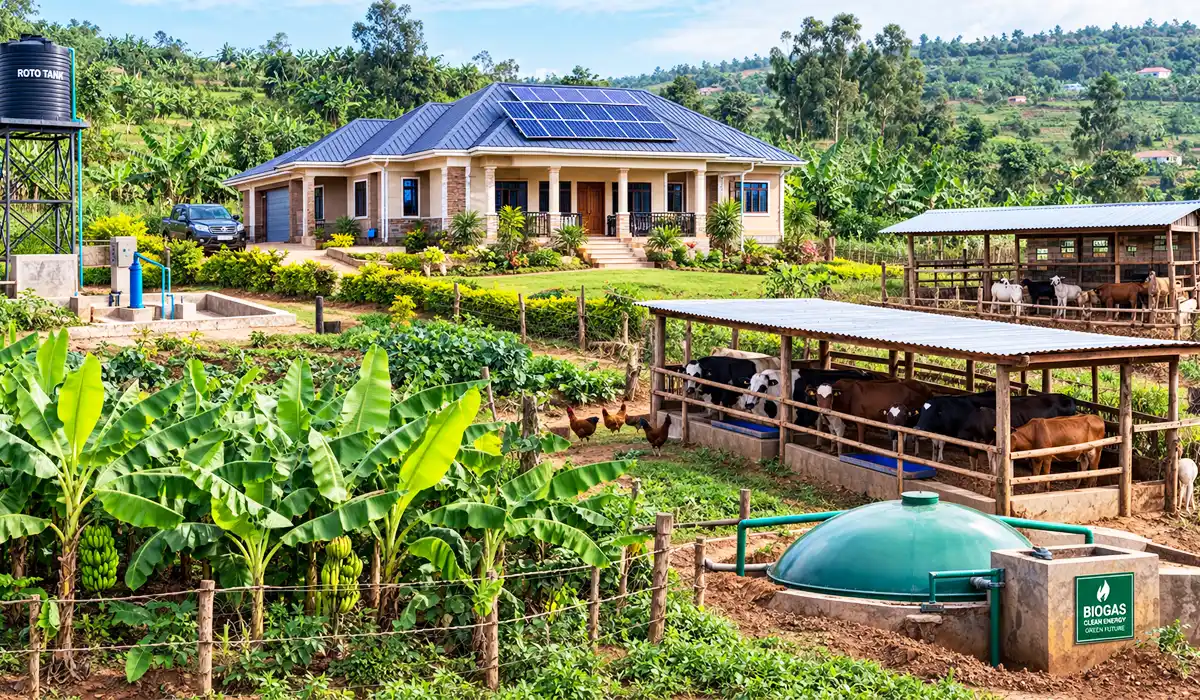
Most of us never question monthly bills. Yaka, water, rent, internet, girlfriend, TV money leaves the account every month like the monsoon winds are sweeping it away, and we shrug and call it ‘this Museveni country.’ Truth is, we are so addicted to this city life that we never think about how much it drains our pockets and sanity, and we are so in love with calling a friend for an urgent ka-10K!
Because if you actually sit down and think about it, almost none of those costs have to be paid monthly. It just takes upfront money and a plan. And I am not even a genius.
Step One: Buy The Land, Or Put It in Place
Everything else on this list depends on this one decision, so get it right first.
Land you own outright lets you do anything you want on it without asking anyone’s permission. Rented land, or land you’re still paying off, keeps you one disagreement away from losing everything you’ve built on it.
Go for rural or peri-urban land zoned agricultural rather than urban plots; it’s cheaper to buy, carries lower ongoing property rates, and gives you room to run a farm rather than a garden box. Get the title properly searched and registered before you build anything. Skipping that step to save a bit of money is how people lose land they thought they owned. And get a lawyer; LC chairmen will fleece you.
Once the land is yours, everything below becomes a construction project instead of a negotiation.
Water: Dig Once, Drink for Decades
A borehole is the single biggest lever here; once it’s drilled, your water bill is essentially gone for good.
Add a solar-powered pump, an elevated tank, and rainwater harvesting off your roof as backup; Uganda’s rains make this genuinely worthwhile. Get the water tested before you drink it straight; shallow groundwater here can carry iron or bacteria you’ll want filtered out first.
Power: Let The Sun Send the Bill
Uganda’s sun shows up to work daily, making solar sizing far more predictable than in other places. Start by tallying what you actually use: every appliance, its wattage, hours per day. Most households in Uganda land somewhere between 5 and 15 kWh per day. Build from there: enough solar panels to cover it, a lithium battery bank to ride out a cloudy day or two, a hybrid inverter to tie it together, and a small generator kept strictly for emergencies, not daily use.
Get quotes from installers who’ve actually been around a while; after-sales support in this market varies wildly, and a cheap install with no support is a bad trade.
TV: Pay Once, Watch Forever
This one is simple. Buy a television with a built-in DVB-T2 tuner, or a standalone free-to-air decoder, usually at UGX 70,000 to 120,000, and you get NTV, NBS, Bukedde, UBC, and the rest with no subscription, ever. Look for the Signet or UCC compliance mark and buy from a licensed dealer; many knockoff boxes are floating around that aren’t worth the savings.
Want more than local channels? A satellite dish paired with a proper FTA receiver opens up a much bigger world, hundreds of genuinely unencrypted international channels beamed from satellites like Intelsat 20, Eutelsat, and Astra, covering news (Al Jazeera, Press TV, BBC-adjacent feeds), religious programming, documentaries, and African diaspora content. In Uganda, people usually reach for StarSat-branded boxes, Strong receivers, Zgemma units, or generic combo boxes sold as “Q-Box” on Jumia and in electronics shops around Kampala.
Food and Fuel: Make the Land Earn Its Keep
Museveni’s One-acre model is not as bad as we think. Divide your land into modest plots with a vegetable patch, some fruit trees, and a handful of chickens or goats.
If you’re keeping animals anyway, add a biogas digester: manure and kitchen scraps turn into cooking gas, and your charcoal bill quietly disappears. No livestock yet? A fast-growing woodlot does the same job for firewood, turning a monthly purchase into something your own land produces.
A composting toilet closes the loop even further; no sewage bill, and it feeds straight back into the compost heap.
The Costs that Don’t Look Like Bills but Are
A few expenses hide in plain sight because nobody labels them “utilities,” but they behave exactly like one:
Charcoal and firewood – solved above with biogas or a woodlot.
Fuel for transport – an electric motorcycle charged off your own solar setup.
Airtime – WiFi-powered calls (WhatsApp) instead of buying telecom credit.
Bank fees and loan interest – a SACCO for savings, an emergency fund instead of borrowing.
Private security subscriptions – a solid wall and a couple of dogs, the old rural standby.
Put Some Money to Work, Not Just into the Ground
Everything above is about cutting expenses. But there’s a second half to real financial independence: making your money grow on its own, without you having to farm it or fix it. That’s where the stock market comes in.
Uganda has its own securities exchange, the Uganda Securities Exchange (USE), where you can buy shares in publicly listed companies and government or corporate bonds through a licensed stockbroker. Shares give you a stake in a company’s profits (paid out as dividends) and its growth in value over time. Bonds pay you fixed interest for lending money to a government or company, generally steadier and lower-risk than shares.
The appeal for someone chasing self-sufficiency is simple: unlike a borehole or a solar array, this is money that works for you without any maintenance, land, or supervision. A portion of whatever you would otherwise spend on rent or subscriptions is redirected into a mix of shares and bonds over years, building a second income stream that isn’t tied to your farm, your health, or the weather.
A few honest notes: this isn’t free money, and it isn’t guaranteed. Share prices go up and down, and you can lose money as well as make it. Spread your money across several companies and a mix of bonds rather than betting on one stock, and treat it as a long-term holding, not something you touch every month. I’m not a financial advisor, so talk to a licensed stockbroker or financial advisor before you commit real money; they can walk you through the actual companies and bonds on offer and what fits your situation.
Where This Leaves You
Nothing here gets you to absolutely zero. Property rates, government taxes that keep appearing from nowhere, occasional equipment servicing, and basic legal compliance tend to stick around no matter how self-sufficient you get. But land, water, power, television, food, and a chunk of your fuel costs really can move from “money out the door every month” to “paid for once,” and the money you free up from cutting those bills can go straight into shares and bonds that quietly grow while you’re busy running the farm.
Buy the land first; everything else follows from that one decision.
Compiled by Mwesigwa Joshua