
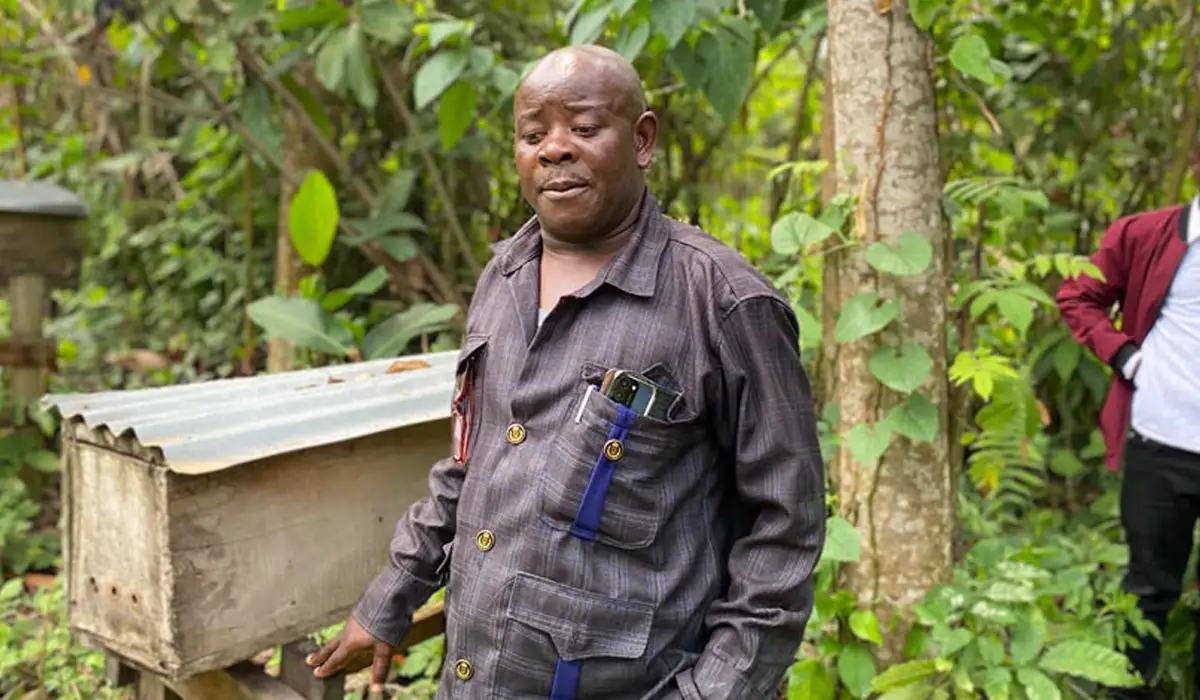
For William Kimera, a passionate 50-year-old farmer and community mobilizer, the journey to becoming a pioneer of agroforestry began most unexpectedly, at a dusty local pitch in Kyondo sub-county.
As a lifelong lover of nature, Kimera grew up watching his father plant eucalyptus and macadamia gardens. But it wasn’t until a chance encounter after a football match that Kimera realised his family’s passion could become a vehicle to lift his entire community from poverty.
“For my case, I’m a footballer,” Kimera recalls. “There was one member of staff at ECOTRUST who attended those competitions. After the match, he talked about ECOTRUST and tree planting. I had never heard of it, but having talked about it, I became interested.”
The interest quickly turned into a green revolution in Kisanga village in Kyarumba Town Council, Kasese District. He learned about the Trees for Global Benefits (TGB) program, an initiative that pays farmers for the carbon sequestered by the trees grown.
Sceptical but curious, Kimera and his fellow cooperative members from Kyarumba Banywani Tree Farmers (KBT) made an exchange visit to MIFA, a neighbouring SACCO that had also benefited from ECOTRUST, to see if the “cash for trees” was real. “They were,” he exclaims.
Returning home inspired, Kimera immediately set to work. He enrolled in the TGB program in 2015 and planted his first 200 trees that same year. He chose a diverse mix of species, including Grevillea, Mahogany, Albizia, Macadamia, and various fruit trees, especially Mangoes. Kimera carefully selected each variety not just for timber, but for climate modification, firewood, bee forage, and, in the case of Albizia, to shade and nourish his coffee plants.
The financial structure of the program provided immediate relief, but true wealth lies in the long-term vision, as he explains.
“When I first heard about the program, I loved it because I had never heard about anyone being paid for simply planting trees. My first thought was how this could relieve our people from poverty. I mobilised the community, which embraced the program, and indeed, they have not ashamed me. They have grown the trees, and the cash is changing their lives.” Kimera says.
The ongoing carbon payments act as a bridge, helping the farmers and their families while the green investments mature.
“According to the training we received, this money is for motivation and maintenance so that people don’t cut down their trees prematurely. While the short-term payments help us manage our homes, the long-term target is what excites us. When we did the calculations, we realised a farmer can get over UGX 100 million if they maintain their trees until harvest time.”
For Kimera, forestry is not about replacing agriculture; it is about enhancing it. By practising agroforestry, he has watched his crop yields and farm biodiversity grow. This healthy environment inspired him to start beekeeping as well.
“I have integrated my trees directly into my coffee plantations. Species like Albizia provide natural manure to the soil, and our coffee yields have heavily increased. Meanwhile, the Toona ciliata and Macadamia trees have increased our honey production because of their heavy nectar.”
The partnership with ECOTRUST also helped Kimera’s cooperative buy a pulping machine. This allows them to process raw coffee cherries into high-value parchment coffee, making Kimera incredibly proud as a group leader.
“Through the support of ECOTRUST, we’ve gone from just growing coffee to adding value. We received pulping machines to process red cherries into parchment coffee, and now we are drying, grinding, and packaging our own brand. It has completely changed our business.”
The environmental benefits of the tree-planting initiative have been felt far beyond Kimera’s farm. The trees have improved the local weather and protected the land from harsh weather. They have also brought peace to a long-standing conflict between local communities and the nearby national park.
“The rains we are receiving these days have increased compared to the past because of these trees. Soil erosion, which used to be a massive problem for us here, has been minimised, and the trees are even consuming the fumes from local grinding and processing factories to clear our air.”
Importantly, planting indigenous medicinal trees on private land has stopped dangerous encroachment into gazetted wildlife areas.
“People used to illegally encroach on the National Park looking for herbal medicines. Many would get trapped there, arrested, and suffer in prison. Today, those conflicts have been minimised because we have planted our own herbal medicine trees right in our gardens to treat common ailments.”
Now a father of five, Kimera is making sure the roots he has planted run deep into the next generation. He spends his afternoons teaching his children the delicate art of forest management, ensuring that his family’s relationship with the land remains unbroken.
“I am raising my children to love the environment. Even if you visit my home today, my children will gladly show you where our trees are. I involve them in pruning, weeding, and protecting the forest from fires. I teach them the use of each species so that they can keep this heritage alive long after I am gone.”