
Read Part 1 of this article.
The Other Neighbours: Visual Artists, Directors, and Photographers
The copyright conversation in Uganda has focused on musicians, composers, and producers. But a music project is a multimedia product, and the people who build that multimedia layer are left out.
The graphic designer who creates the album artwork, the photographer whose image defines an artiste, and the music video director who executes a visual narrative, all of these contributors have invested creative labour. In practice, they are almost always paid a flat fee and sent home.
Consider a video director who shoots a visual that becomes as iconic as the song. If that video generates views that drive music revenue, streaming numbers, performance bookings, and brand deals, the director who created that visual contributed directly to that revenue. Yet they received their fee and nothing more.
Their monetary value in the project should be calculated honestly. If the project budget can absorb a flat fee, that is one model. If the director is contributing creative vision that will be central to the project’s commercial success, a royalty or profit-sharing arrangement may be more appropriate. What should not happen is what currently happens by default: a one-time payment, a verbal agreement, and a complete erasure of contribution from the commercial record.
Synchronisation, Licensing, and the Return of Publishing Companies
When people talk about the ‘future of music revenue,’ we tend to focus on streaming royalties. But the most sustainable and underexplored revenue streams in Uganda’s market lie elsewhere, in licensing and publishing.
Music licensing, sometimes called synchronisation or sync licensing, is the process of clearing music for use in a specific context, such as a television advertisement, film soundtrack, documentary, or corporate presentation. When a local broadcaster wants to use a song as a theme tune, or when a film producer wants to score their movie with local music, licensing is the mechanism. For artistes who find the royalty-negotiation landscape too contentious, licensing offers a clean exit route: record high-quality instrumental or vocal music, register its copyright with URSB, and then sell the copyright outright to a licensing company or a corporate buyer without ongoing royalty obligations. No streaming disputes. No CMO deductions. No producer claiming a share. A direct transaction: music for money.
This model will return, and return with strength, as copyright enforcement tightens and corporate users seek legally clean music for their productions. Television stations, film companies, advertising agencies, and digital content creators need music constantly. If Uganda’s artistes can build catalogues of production-quality, easily licensable music and make them available to these buyers, either directly or through a Ugandan licensing company, the revenue potential is significant and recurring.
The second model is the music publishing company. Publishing, the business of acquiring the rights to a music catalogue and exploiting them commercially, has been underdeveloped in Uganda, after the fall of the tape. But as the new law creates clearer property rights in music, catalogues will become quantifiable assets. A publishing company that acquires the right to distribute and exploit a catalogue of Ugandan music, for an agreed period or in perpetuity, can generate revenue through synchronisation deals, cover recording licenses, streaming sub-licenses, and international performance rights collection.
In 1985, Michael Jackson purchased ATV Music, which held the publishing rights to over 4,000 songs, including more than 250 Beatles compositions, for $47.5 million. Ten years later, he sold 50% to Sony for approximately $95 million, forming Sony/ATV Music Publishing. By 2016, when Sony bought out Jackson’s remaining stake, the deal was worth $750 million. Jackson’s initial investment had grown in value by more than 1,500%. The lesson is not just about money; it is about understanding that a music catalogue is a long-term asset that appreciates over time, not a one-time transaction.
Uganda’s wealthiest artistes, such as Jose Chameleone, Bobi Wine, and Bebe Cool, with a catalogue of decades, could, in principle, begin to purchase or invest in the catalogues of other Ugandan artistes, particularly those from an older generation who may not have the resources to monetise their music in the new digital economy. This would not be charity; it would be an investment. The investor artiste earns from the catalogue; the selling artiste receives capital they can use now. The model exists. The question is whether Uganda’s music industry will move towards it.
And on the distribution side, Uganda has UgaTunes as a local digital distributor, and Tidal, the artistes-co-owned streaming platform founded by Jay-Z that has been operating in Uganda since 2018 through a partnership with MTN. If Ugandan musicians are serious about owning their industry, the next logical step is to build or co-invest in distribution infrastructure, platforms, labels, and aggregators owned and governed by the artistes themselves, not by foreign interests.
The 20-Year Clause on Reclaiming Sold Music: Eddy Kenzo Was Mistaken
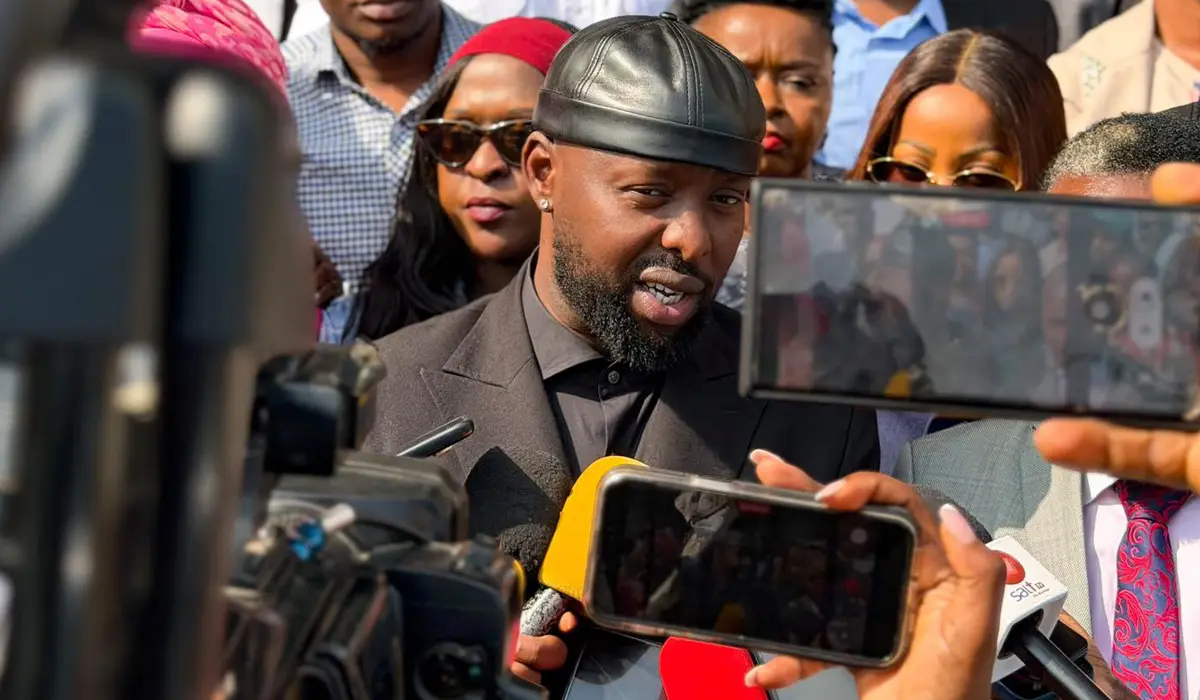
When Parliament passed the bill on March 17, 2026, Eddy Kenzo told the press that the period for an artiste to reclaim their sold rights has been reduced from 50 years to 20 years, and that this meant veteran artists could now recover their catalogues. His optimism was understandable. His legal interpretation was not.
MP Hilderman corrected the record immediately: the law will not apply retroactively. Artists who previously sold their rights under contracts signed before the bill takes effect cannot use the new law to reclaim them. Those contracts remain valid. The musicians who sold their catalogues years ago will not be able to recover those works under this amendment.
Hilderman was direct: those artistes will need to create new music and start afresh. The amendment protects future transactions, not past ones.
The practical implication: if you are an artiste who signed a rights transfer contract with, say, Kasiwukira, before the law takes effect, the old framework governs that contract. If you sign a new contract after the law takes effect, the 20-year reversion right will apply to that contract. The distinction matters profoundly, and every artiste, manager, and investor in Uganda needs to understand it clearly.
Foreign Music in Uganda & the Question of UPRS Effectiveness
Walk into any Ugandan bar, hotel, radio station, or shopping mall; you will hear international music, much of it belonging to artists whose rights are registered with organisations like BMI (Broadcast Music, Inc.) or ASCAP (the American Society of Composers, Authors and Publishers), the two major American performing rights organisations, and PRS for Music in the United Kingdom. Under the global framework of reciprocal representation agreements between rights organisations, these bodies are entitled to collect royalties when their members’ works are publicly performed in Uganda. The body responsible for collecting these royalties here is the Uganda Performing Rights Society (UPRS).
UPRS, formed in 1985, is a member of CISAC, the Confederation of International Societies of Authors and Composers, and has entered into reciprocal representation agreements with rights organisations worldwide. In theory, this means that every time a Ugandan radio station plays an Ed Sheeran song, or a Ugandan hotel background-streams a playlist of international music, a licensing fee is owed—and UPRS is supposed to collect it on behalf of BMI, ASCAP, and their equivalents, just as those organisations collect on behalf of Ugandan rights holders when Ugandan music is played in the United States or the United Kingdom.
The critical question the new law must answer in practice is: how effectively is UPRS actually doing this? Licensing compliance from Ugandan media houses, broadcasters, and public venues is notoriously inconsistent. If UPRS cannot demonstrate to BMI or ASCAP that it is enforcing licensing obligations with rigour, those international organisations have no incentive to reciprocate properly, meaning Ugandan artistes lose royalties they are owed every time their music is played abroad.
If Uganda wants the full benefits of international copyright alignment, including the ability to collect performance royalties from foreign broadcasters, it must ensure that UPRS operates at a standard that international bodies can trust. The new law’s enhanced enforcement tools are a start. But enforcement is only credible when it is consistent, transparent, and audited.
Artistes as Investors and Shareholders: A Vision
The final proposal is perhaps the most ambitious, but it is also the most necessary. Uganda’s artistes federation and related bodies should stop thinking of themselves only as advocates and start thinking of themselves as investors and shareholders.
First, the Uganda National Musicians Federation should institute an independent auditor, not an internal committee, but an external, professionally credentialed financial auditor, with a clear mandate to track all financial flows, to ensure that administrative and operational costs do not consume artistes’ royalties: from CMOs, UPRS, or any institution that handles money on behalf of music artistes. The 70/30 distribution rule in the new law is only as powerful as the ability to verify whether it is actually being applied.
Second, artistes should formalise their governance of UPRS. The Society already belongs to its members in a legal structure. But that ownership must translate into active governance: artistes should be voting delegates and notified shareholders, receiving regular financial statements, attending or mandating representation at every significant decision-making meeting. Passive membership in an institution that controls your money is not membership, it is abdication.
Third, and most ambitiously: the royalty income that artistes receive should not all be paid out as cash and consumed. Some portion of it should be directed into investments. Uganda’s artiste collective bodies should explore purchasing shares and bonds in Ugandan companies, participating in government securities, and, most strategically, acquiring equity stakes in music-adjacent infrastructure: recording studios, streaming platforms, events venues, and distribution companies.
The government has a role to play here. The same way it might loan or guarantee capital for agricultural cooperatives or trade associations, it could structure investment programmes that allow artistes’ collective bodies to acquire ownership stakes in industry-relevant companies. Instead of royalty income being paid out in cash, spent, consumed, and gone, it could be channelled into appreciating assets. This is not utopian. It is the structure of sovereign wealth funds, adapted to the creative economy. And it is the difference between an industry that extracts income for a generation and one that builds wealth for generations.
Compiled by Mwesigwa Joshua