
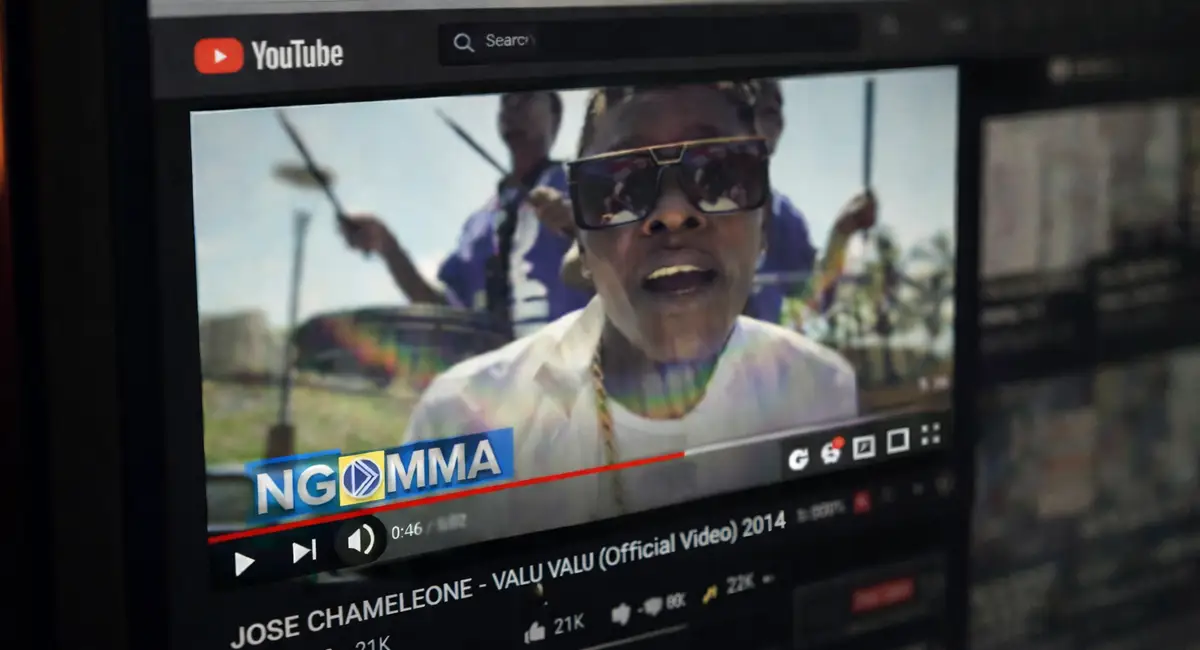
Some songs define a career, and some define an era. Jose Chameleone’s Valu Valu is both. The 2012 Swahili-laced love anthem became one of the defining records not just of Chameleone’s catalogue, but of East and Central African popular music at large. Yet what makes it truly remarkable is not just the song, but the fact that it got two music videos, and the story behind tells you almost everything about where African music was headed at the time.
The first video was shot by Lukyamuzi Bashir, head of BADI Films, one of the most accomplished music video directors at the time. Known simply as Badi, Bashir broke through around 2007 with Aziz Azion’s Nkumila Omukwano and went on to direct works for Goodlyfe Crew, GNL Zamba, Eddy Kenzo, and Keko. He was a music video revolutionary, reconciling the then-new-in-Uganda R&B/Hip Hop sound with a US-like RnB/Hip Hop visual picture. He was the guy you went to if you wanted a Chris Brown-like video. He, Kim XP/Seasonz Filmz, Grate Make, KingdomFilmz 3X3, and Plazma1 were the gods of urban music videos before Swangz Films and Jahlive Studios came into the picture. But the BADI entity was more than a music video production outfit; it was a music label outfit that nurtured A Pass and Ykee Benda.
The First Music Video for Valu Valu by Jose Chameleone
Bashir’s Valu Valu video followed a storyline of romantic conflict, a cheating woman (who cheated on his boyfriend with Chameleone), a drama that unfolded scene by scene and a piano-playing Chameleone. It was accomplished work. But Chameleone’s question, it seems, was not whether the video was good; it was whether it was good enough for where he wanted the song to go.
The Channel O Standard: When a Video Could Open or Close Doors
By 2012, three channels, Channel O, MTV Base, and Trace Music, had become the gatekeepers of pan-African musical ambition. Getting your video onto these platforms meant reaching a continent-wide/global audience; failing to meet their standards meant staying local. When MTV Base launched in February 2005, one of its earliest challenges was the shortage of high-quality videos from African artists that met its technical and aesthetic bar. The channel responded with workshops and initiatives, but the underlying message was blunt: if your video did not look right, it would not play.
Nigeria’s P-Square had figured this out early. Their polished videos were regular Channel O fixtures, and even winning big at the Channel O awards with Bizzy Body. Their subsequent collaboration with Johannesburg’s Godfather Productions on Do Me became one of the most requested videos on MTV Base Africa. That benchmark, cinematic, stylish, not-so-much-plot, was what East and Central African artists should have been chasing.
The Radio & Weasel camp documented that the Talk and Talk music video, shot by BADI for a global audience, was submitted to Channel O and rejected. The duo re-shot Magnetic, which already had an okay video, in South Africa, and it was accepted. Subsequent videos they wanted to push internationally, Fantastic, Home to Africa ft PJ Powers, Breath Away, were all redirected to South Africa thereafter. The lesson had been learned at cost, and it was one that the wider industry absorbed quickly.
Chameleone, with Valu Valu already a continental hit and a song he clearly believed had the legs to go further, took that direction too.
South Africa & the Visual Economy of African Music
South Africa, Johannesburg and Durban in particular, had become the de facto production hub for ambitious African music videos. The country’s developed film infrastructure, professional-grade equipment, experienced crews, and photogenic locations meant that videos shot there simply looked different. It was about resources, technology, and a production culture built over decades of formal film and television work.
Tanzania’s Ali Kiba understood this too. His Sony Music-era hit Aje (and other videos) was shot in Cape Town by director Meji Alabi. Diamond Platnumz, who would become the most decorated artist in East and Central Africa, famously took out bank loans to finance shoots in Lagos and South Africa, collaborating with Mike Ogoke of Godfather Productions, who shot Utanipenda, Ntampata Wapi, Kidogo, etc in Johannesburg. Until 2019, when he founded Zoom Productions, Diamond’s works and those of his Wasafi label-mates were shot either in South Africa or by South Africans, or both. The formula was established: go south, get international.
Bebe Cool, Chameleone’s long-time peer, grasped the same reality. He is spoken of as having invested in high-quality video cameras and collaborating with Sasha Vybz, a Ugandan director who trained at City Varsity College in Cape Town alongside the likes of Clarence Peters, and would get into the practice of flying Sasha Vybz to the United States for shoots. His experience on Love You Everyday video (short by Clarence Peters’ Capital Dreams Pictures) and the videos he did on Necessary Noise, which were highly pitched on Channel O, was a leaf to be picked.
iKind Media, Matt Nefdt, & Valu Valu Video Review
The production house behind the second Valu Valu music video was iKind Media, a Durban-based digital creative agency founded by Michael Nefdt. The director was Matt Nefdt, trained in Video Technology at the Durban University of Technology and experienced across directing, filming, and editing through early work at LA NEFDT Productions and iKind Media itself. The company’s portfolio extended beyond music, including the internationally noted ‘Africa For Norway’ campaign production.
The contrast between the two Valu Valu videos crystallises the broader shift. The BADI video gave you a plot. The iKind video gives you sensation: light, water, texture, movement, skin. No narrative arc, no characters with clear intentions. The edit is driven by feeling. This was not a stylistic accident; it was the precise language that Channel O, MTV Base, and Trace had established as the currency of international African music video production. Videos that travelled well prioritized mood over message, aesthetic over story.
Durban’s Coast, Slow Motion, & Moyo
The locations chosen for the second Valu Valu video are breathtaking: the warm Indian Ocean coastline, Durban’s sweeping beach vistas. And yet Matt Nefdt makes a deliberate, almost contrary choice: he refuses to let you settle into them. Rather than lingering on wide shots, the camera moves close. Face tracking, close-up on details such as hands breaking through water and the texture of a wet surface. The grand backdrop is blurred into a dreamlike wash of colour while the lens fixates on the tactile and the intimate. A lesser director might have made a travel postcard. Nefdt uses the landscape as atmosphere, something you feel rather than simply see.
Slow motion is the video’s primary tool, applied to semi-nude bodies in water, droplets breaking the surface, and movement against light. It forces the viewer to sit with moments that would otherwise blur past, giving the video the same unhurried emotional patience as the song itself.
A significant location detail: Chameleone is seen walking into Moyo, the iconic restaurant and beach bar on the uShaka Marine World pier. Moyo is the Swahili word for soul/heart, embodying the meaning in the second verse, “Moyo wako ufungue.” Open your heart.
Styling, Credits, & the Full Visual Package
The video’s YouTube description credits include a ‘Special Thanks’ to @thesocialitesa. @thesocialitesa’s Facebook handle, which we chose to look up on Facebook because it was the social media when the video came out, identifies it as a brand focused on fashion, lifestyle, and entertainment.
In a music video context, such a brand’s role would typically involve styling the artists and models on screen: the clothing, accessories, and overall look that signal polish and intentionality. This matters because what made South African-produced videos read as ‘international’ was not just camera quality or location; it was the total aesthetic.
A well-styled video signals a budget and a vision that local productions, however talented, often could not fully assemble at the time. Chameleone and iKind were not simply hiring a camera crew; they were assembling a complete visual package. They were also doing business at extension: iKind has a bikini store, which must have supplied the bikinis seen in the video; perhaps the inclusion of the bikini-girls was a marketing strategy for their store.
See Diamond Platnumz’s behind-the-scenes video to get a feel of how much such companies contribute to the polished picture we see in music videos.
Also worth noting: there are no artist or title credits on-screen announcing ‘Jose Chameleone’ or ‘Valu Valu.’ This was in line with Channel O’s submission requirements (you submitted the metadata to them by email, so that they included it themselves in the video, not you), which discouraged on-screen text branding; stardom should come with the confidence of an artist knowing his audience already knows his name when they see his face. The music speaks for itself, because the name behind it is already a legend.
Valu Valu was a song that earned the right to be revisited. The second video finds a visual language, intimate, slow, sensory, coastal, that genuinely deepens the emotional world of the song. Was the first video enough? For Uganda, perhaps. But the second one asked a different question: what does this song look like when dressed for the continent? The answer is something worth watching twice.
Compiled by Mwesigwa Joshua